Lanzarote Wine Brands Worth Buying: Bottles For The Flight Home
Almost none of Lanzarote's wine leaves Spain, so the bodega door is the only reliable place to buy most of it. This guide sorts the brands worth the weight from the ones you can skip.
Short answer
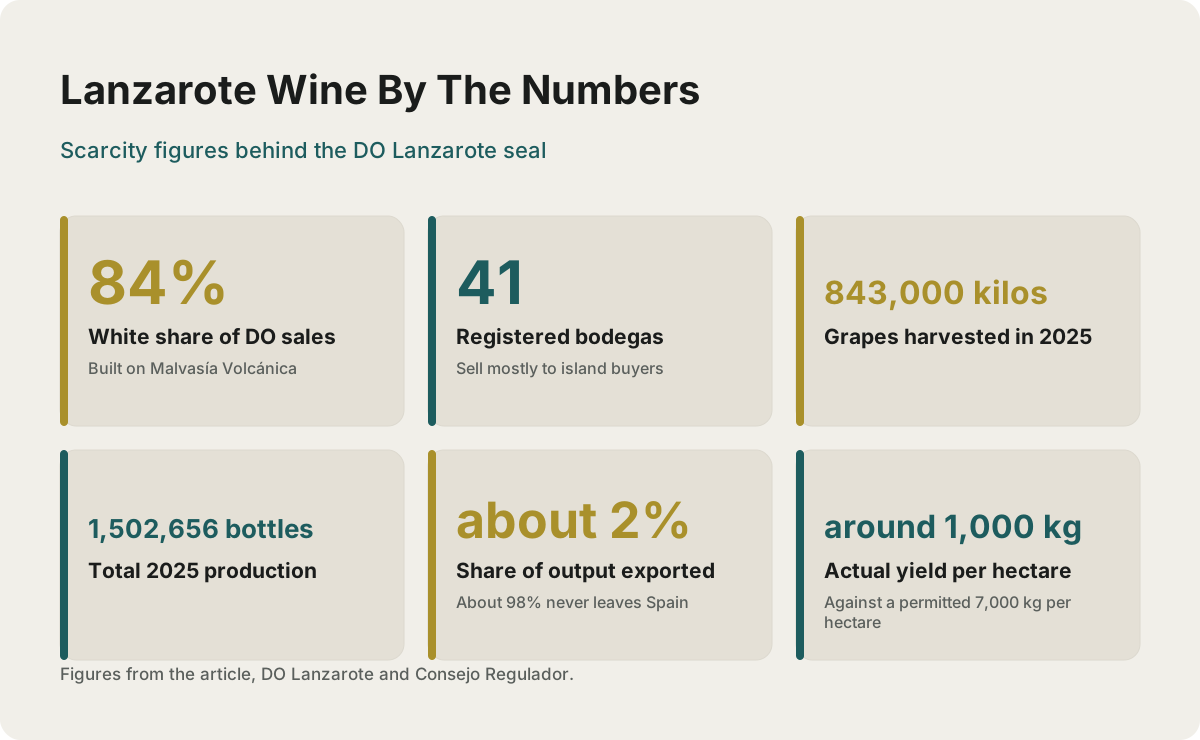
Buy dry Malvasía Volcánica from El Grifo, Vega de Yuco or Los Bermejos, and one semi-sweet malvasía for contrast. Look for the DO Lanzarote seal, expect roughly 84% of what you find to be white, and buy at the winery: about 98% of the island's wine is drunk inside Spain, so home shelves rarely carry it.
Which Lanzarote Wine Brands Are Worth Buying?
The brands worth the luggage allowance are El Grifo, Vega de Yuco, Los Bermejos, Bodega La Geria, Stratvs, Rubicón and Martinón, all of them under the DO Lanzarote seal, and almost all of them white, because roughly 84% of what the appellation sells is white wine built on Malvasía Volcánica, and about 98% of the DO's output never leaves Spain. If you want these bottles at home, the winery shop is where you buy them.
That last figure is the one that changes how you shop. A wine region that exports only around 2% of its production does not build a distribution network abroad. Lanzarote's 41 registered bodegas sell mostly to island restaurants, island shops and island visitors, and the supermarket shelf back home will not stock them. Whatever you fall for at the tasting counter, you carry it yourself or you do not drink it again.
The good news is that the buying itself is easy. Nearly every bodega on the island sells at the door, several pour by the glass while you decide, and the whole wine country sits within half an hour of every resort. You can taste at two or three wineries in an afternoon and still be back for dinner.
There is a second reason to take the shopping seriously. The 2025 harvest brought in just 843,000 kilos of grapes, which became 1,502,656 bottles for the entire island. That sounds like a lot until you spread it across every restaurant, hotel and wine bar serving 3.4 million annual visitors. Individual bottlings, especially the small-run old-vine wines, sell out between one vintage and the next.
Dry Or Semi-Sweet: The Malvasía Split You Need To Understand First
Lanzarote's signature grape, Malvasía Volcánica, comes in two broad styles, a dry, mineral white and a semi-sweet or fully sweet version, and they are different products for different moments: the dry wines are what the island's winemakers enter in international competitions and what most locals drink with food, while the sweet and semi-sweet malvasías are the historic style, richer and honeyed, and they are what most visitors remember. The split matters because the shelf confuses people.
A bottle labelled simply "Malvasía" could be bone dry or dessert-sweet, and the price does not tell you which. Check the back label for "seco" (dry), "semidulce" (semi-sweet) or "dulce" (sweet) before you commit luggage space. The dry wines pair with fish and the island's goat cheese; the sweet ones suit dessert, foie or an evening glass on its own.
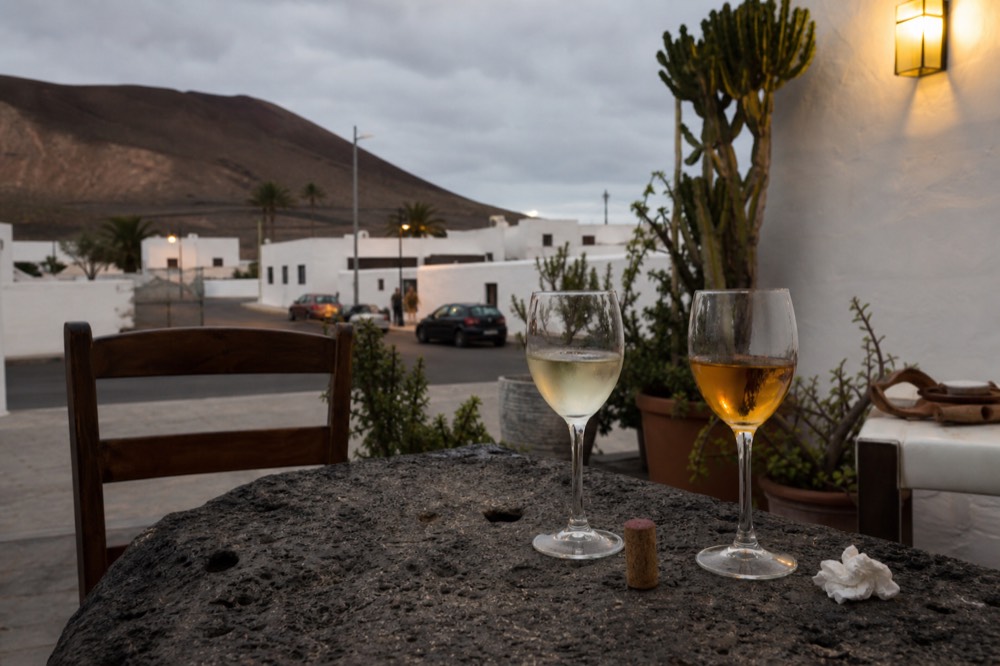
Here is the honest style map, built from what the DO's own specification protects and what the bodegas actually bottle:
| Style | What it tastes like | Best buy for | Who does it well |
|---|---|---|---|
| Dry Malvasía Volcánica | Citrus and flint, saline finish, medium body | Everyday drinking, food pairing | El Grifo, Vega de Yuco, Los Bermejos, Martinón |
| Malvasía on lees | Rounder, creamier, more texture | People who find young whites too sharp | Vega de Yuco (Princesa Gara) |
| Semi-sweet malvasía | Honey, ripe apricot, gentle acidity | Aperitif or dessert, casual drinkers | El Grifo, Bodega La Geria |
| Sweet "dulce natural" | Concentrated, marmalade-rich, high alcohol | Gift bottle, cheese course | Bodegas Timanfaya |
| Rosado | Light red fruit, pale salmon colour | Summer lunch on the terrace | El Grifo (Rosado de Lágrima), Stratvs |
| Reds (Listán Negro) | Soft, volcanic, earthy fruit | Red-wine drinkers in your group | Los Bermejos, Vega de Yuco |
If you only have room for two bottles, the consensus answer is one dry malvasía and one semi-sweet. That pairing shows both faces of the same grape, and it is exactly what most winery tastings pour so you can compare before paying.
The surest way to run that comparison is a guided tasting rather than guesswork at a shelf:
Each of those three ends with a tasting flight that covers the dry-to-sweet range, and every one of them can be cancelled free if your plans shift.
What The DO Lanzarote Seal Actually Guarantees
The DO Lanzarote seal on a capsule means the wine was made on the island from authorised grape varieties, under a yield ceiling of 7,000 kg per hectare, checked by the Instituto Canario de Calidad Agroalimentaria, and it has covered the whole island since recognition in 1993. It is a real appellation in the Spanish regulatory sense, not a marketing badge, and it is the first thing to look for on any bottle you are weighing against your baggage limit.
The appellation's rules are strict in ways that matter to quality. Harvest must be selective, meaning grapes are picked by hand in conditions; extraction is capped at 74 litres of must per 100 kilos of grapes; and the permitted varieties list puts Malvasía Volcánica in the preferred group alongside Diego, Listán Blanco and Moscatel de Alejandría. International grapes like Syrah and Tempranillo are authorised but secondary.
One thing the seal does not tell you: the vineyard story behind it. Lanzarote's vines grow in hand-dug pits through volcanic ash, roughly 3 metres across and 2 to 2.5 metres deep, each shielded by a half-moon stone wall against the trade winds. In the deepest-ash zone there are about 36 pits per hectare, against thousands of vines in a conventional vineyard. The full story is in how Lanzarote grows wine in volcanic ash, and it explains both the price and the scarcity of every sealed bottle.
The seal also does not mean "sweet". Roughly 84% of DO Lanzarote's sales are white, but that white spans bone-dry to dessert. Read the label, not just the capsule.
Why These Bottles Are Scarce: The Harvest Math
Lanzarote wine is scarce by physics, not marketing: the appellation permits 7,000 kg per hectare but La Geria actually yields around 1,000 kg, and the whole island harvested 843,000 kilos in 2025, which became 1,502,656 bottles. Two years earlier the crop was 3.3 million kilos, so volumes swing hard with the weather, and a small vintage clears the shelves fast.
The gap between ceiling and reality comes from the growing system. Vines planted one to a pit, in desert conditions with under 150 mm of rain a year, simply cannot produce much fruit. What they do produce is concentrated, which is the trade the island made six years of eruptions between 1730 and 1736 forced on it.
The 2026 campaign has been a different story. Picking began in the first week of July, around 900,000 kilos were in by early August, and the Consejo Regulador's forecast is a close above three million kilos, roughly triple 2025. Growers were paid about four euros a kilo for their grapes, per press reports. For buyers that means one practical thing: the 2026 vintage will be plentiful, and the 2025 bottles on shelves now are the scarce ones.
If a tasting room pours something from the 2025 vintage that you love, that is the bottle to buy on the spot. Replacements may not arrive until the next bottlings reach the shop.
A tasting that walks the vineyard before the flight makes the scarcity tangible, and the small-group format means the guide can answer vintage questions directly:
The Brands Worth The Weight, Bodega By Bodega
Seven brands cover almost everything worth carrying home: El Grifo for history and old-vine malvasía, Vega de Yuco for the award-winning Princesa line, Los Bermejos for terroir purists, Bodega La Geria and Stratvs for the classic La Geria experience, Rubicón for century-vine character, and Martinón for value dry whites. All seven are registered DO bodegas, and all seven sell at the door.
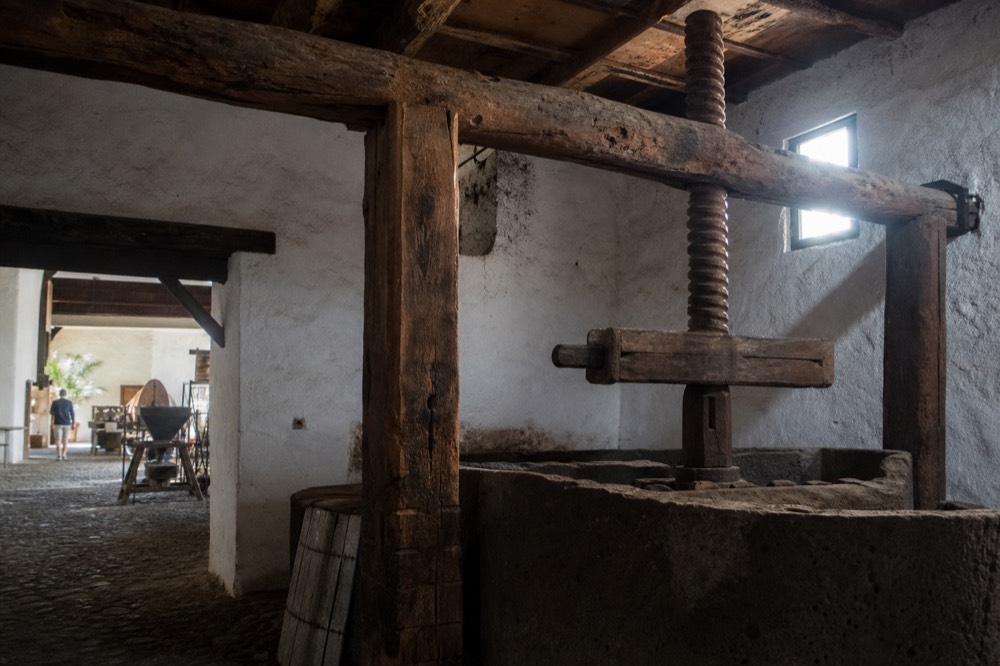
El Grifo is the anchor buy. Founded in 1775, dated by the inscription on its own wine press, it holds wines from 1881 in its library and still farms 19th-century Moscatel vines. It calls itself one of the ten oldest wineries in Spain, and its museum and old winery are part of any visit. Its Malvasía Colección range is the safe flagship purchase; the deeper cut is whatever old-vine or library bottling the shop has that week. More on the winery itself in the El Grifo winery guide.
Vega de Yuco is the competition credentials pick. Its Princesa Gara 2022, a Malvasía Volcánica aged on lees, took a Silver medal at the Decanter World Wine Awards, which corresponds to 90-94 points, praised for typicity, acidity and mineral character. Its Princesa Fayna sparkling won Gold at Bacchus 2026. If you want one bottle that proves the island's quality case to a sceptical friend back home, Princesa Gara is it.
Los Bermejos is the terroir purist's choice. Reopened in 2001 on a property that had lain inactive, it bottles a wide range of references and pours by the glass on its terrace for €3.50 with a cheese cap, no booking needed. Its own site quotes the island's yields at 500 to 1,500 kg per hectare, and its wines taste like the ash they came from: saline, stony, uncompromising.
| Brand | Signature bottle | Why it earns luggage space | Where to buy |
|---|---|---|---|
| El Grifo | Malvasía Colección (dry and semidulce) | 1775 history, old vines, two golds at Mundus Vini 2026 | Winery shop, San Bartolomé |
| Vega de Yuco | Princesa Gara 2022 | Decanter Silver, 90-94 points | Winery and island shops |
| Bodegas Timanfaya | Malvasía Dulce Natural 2018 | Grand Gold at Bacchus 2026, the sweet showpiece | Island retail |
| Los Bermejos | Dry malvasía, Listán Negro reds | Maximum volcanic character, terrace by-the-glass | Winery terrace, San Bartolomé |
| Bodega La Geria | Semi-sweet malvasía | The classic in-valley experience, views of Timanfaya | Winery, on the LZ-30 |
| Stratvs | Rosado and dry whites | Modern winery, Finca de Uga cheese pairing at tasting | Winery shop, Uga |
| Rubicón | Dry malvasía from century vines | Estate vines inside the protected landscape | Winery, free access daily |
| Martinón | Dry white 2025 | Grand Gold at VinEspaña 2026, per press reports | Masdache and island shops |
El Grifo's own tasting tour is the natural companion to shopping there, since you can buy the bottles you have just tasted before you leave:
Yaiza And The Blue Bottle: What You Are Actually Buying
"Yaiza" on a Lanzarote label is a place name and a commercial brand used by Bodegas Vega de Yuco, not an appellation, sub-zone or village classification: DO Lanzarote covers the whole island and recognises no smaller geographical units on the label. The blue bottle is distinctive, the wine inside is a solid Vega de Yuco product, and the confusion is worth clearing up before you pay for the name.
The municipality of Yaiza does contain real wine country, including much of La Geria protected landscape and the wineries at Uga. Several bodegas sit there. But the word on the label, in lines like Esencia Yaiza and the Yaiza varietals, is branding. If a shop presentation implies you are buying a special village appellation, you are not; you are buying a well-made wine from a good producer whose vineyards happen to be in the south of the island.
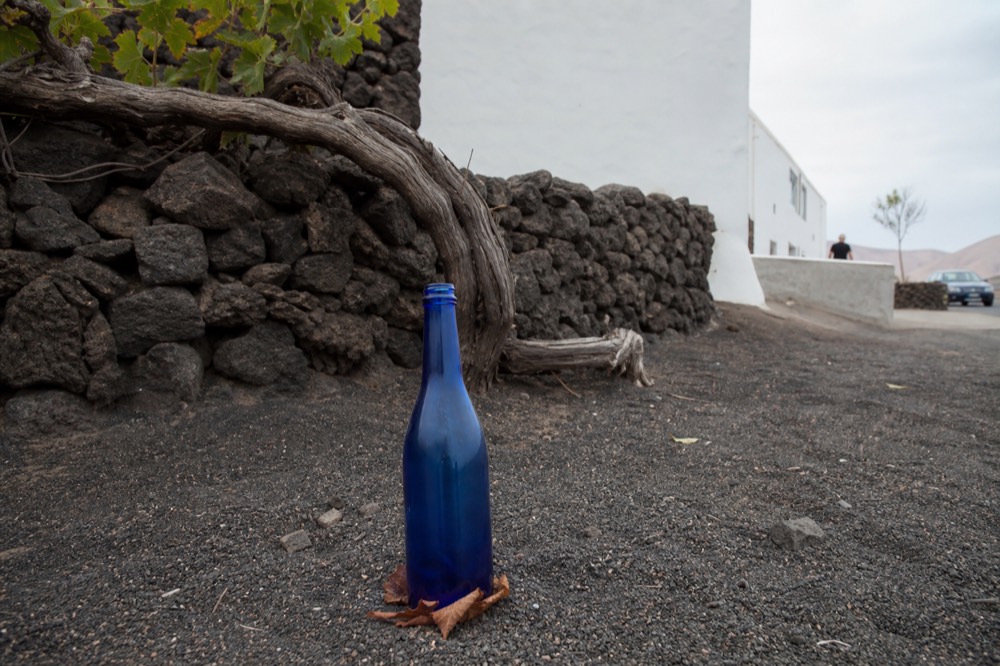
This is not a warning against buying it. Esencia Yaiza, a Listán Negro, won Gold at the International Volcanic Wine Awards, per press reports, and the Yaiza white is a reliable souvenir that travels well and looks good on a shelf. Buy it for what it is. The fuller story of the name is in what is Yaiza wine.
Bodega Door Versus Supermarket: Where The Price Makes Sense
Buying at the winery is usually the better deal on Lanzarote, not because the bottle is cheaper there but because the supermarket at home rarely stocks these wines at all, and about 98% of the DO's production is sold inside Spain. The island's own shops price the famous brands at a premium over the cellar door, and airport shops price them higher still, so the winery visit is the value moment.
What you can verify before you go is the cost of the tasting, not the bottle, and those figures are published by the wineries themselves. El Grifo's own walk-in prices run from a €15 audio tour with two wines up to a €95 tour with lunch. Rubicón's own walk-in tastings are €22 and €40. Los Bermejos charges €21 for a guided visit with tasting, or €3.50 for a glass on the terrace. Bottle prices sit on the shelf and change with vintage, so treat the door as the place to compare them honestly.
| Where you buy | Typical markup feel | Selection | Verdict |
|---|---|---|---|
| Winery shop | Base price, full range including small runs | Best | Buy the bulk of your bottles here |
| Island supermarkets | Moderate, main brands only | Good for El Grifo, Vega de Yuco | Fine for topping up |
| Resort hotel shops | High | Narrow | Skip unless desperate |
| Airport departures | Highest, tiny selection | A handful of brands | Last resort only |
| At home after the trip | Often unavailable | Almost none | This is why you carry it |
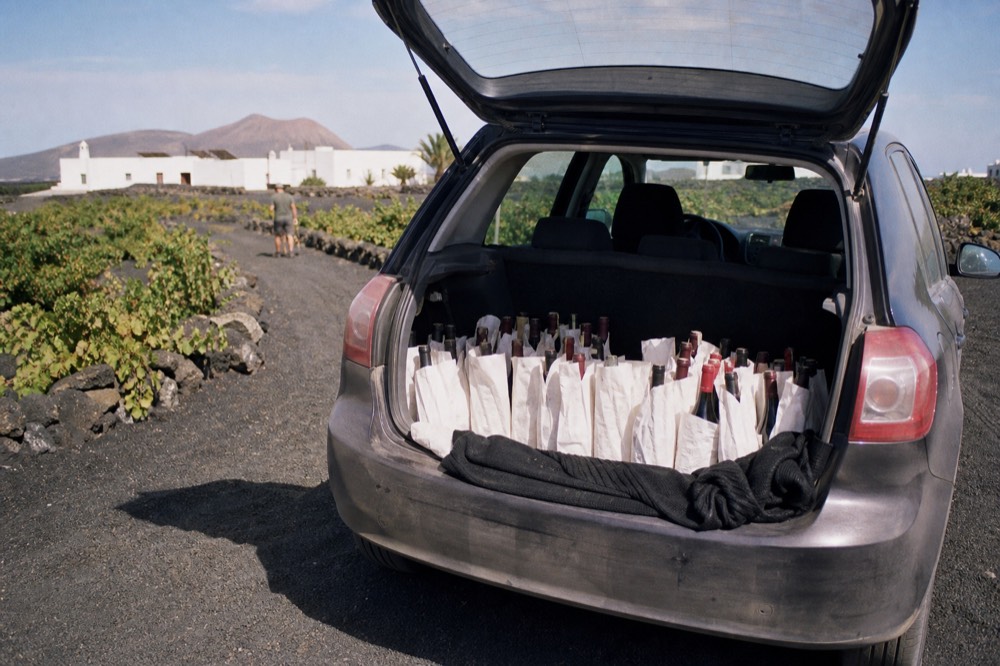
One practical note on the shopping trip itself: Spain's drink-drive limit is 0.25 mg per litre of breath, lower than the UK's 0.35, and a tasting flight will not leave most people comfortably under it. If you are driving the wine route yourself, plan the buying for the last stop, spit or skip, or let someone else drive. The rules and the route are covered in driving the La Geria wine route. For everything else on the island's wine scene, from tasting formats to route planning, Lanzarote Wine Tours covers the ground in detail.
A full-day tour with transport removes that problem entirely and builds in shopping time at multiple bodegas, which is why serious buyers often book one:
Getting It Home: Cabin Rules, Hold Rules And Packing
Wine cannot travel in cabin baggage on flights from Lanzarote under standard liquid security rules, which cap containers at 100 ml, so every bottle goes in checked hold luggage, wrapped and cushioned, with anything above your personal duty-free allowance declared where your home country requires it. Check your own country's duty-free allowance before you fly home, as the rules for bringing wine back vary depending on where you land.
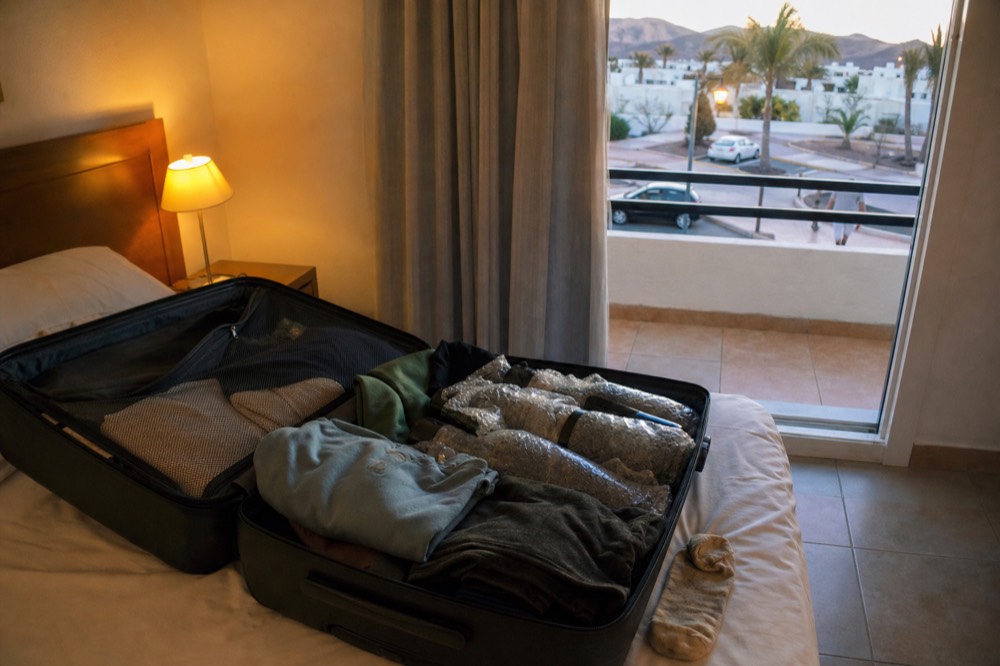
Packing is where bottles die. Use wine sleeves or bubble wrap, one per bottle, and nest them in the middle of the suitcase surrounded by soft clothing. Hard-shell cases protect better than soft ones. A practical limit for a couple travelling with one checked bag each is six bottles; beyond that, the wine's scarcity abroad is exactly why most people simply pack carefully rather than buy more.
If you would rather not gamble glass against baggage handlers at all, some Lanzarote wines can be bought in the UK after the trip. The options and their limits are covered in buying Lanzarote wine in the UK, though the range there is a fraction of what the wineries sell, and the small-run bottles never make it.
Before you fly, these are the three tours our readers book most often for a buying-focused day in wine country:
These are the questions buyers ask most often before committing luggage space to Lanzarote bottles, and the answers below stick to the numbers on each bottle's label and back story: the DO seal's rules, the export share that shapes where you can shop, the customs and liquid limits that decide how much you carry, and the Yaiza naming question that catches out the most visitors.
Common Questions About Buying Lanzarote Wine
Which Lanzarote Wine Brands Are Worth Buying?
El Grifo, Vega de Yuco, Los Bermejos, Bodega La Geria, Stratvs, Rubicón and Martinón, all under the DO Lanzarote seal. For a first trip, one dry Malvasía Volcánica and one semi-sweet from El Grifo or Vega de Yuco covers the island's two signature styles.
Is Lanzarote Wine Expensive?
By quality-to-price standards it is fair rather than cheap. The island yields around 1,000 kg per hectare against a legal ceiling of 7,000, so every bottle is scarce, but cellar-door prices at the wineries are the base price, with island shops and airports marking up from there.
Can I Buy Lanzarote Wine In The UK?
Some brands, yes, through specialist online merchants, but the range is small and the small-run bottlings are not exported. About 98% of DO Lanzarote's production is sold inside Spain, so the winery shop remains the reliable source.
What Does The DO Lanzarote Seal Mean?
It certifies the wine was made on the island from authorised varieties, under a 7,000 kg per hectare yield ceiling, checked by the Instituto Canario de Calidad Agroalimentaria. The appellation was recognised in 1993 and covers all seven municipalities.
How Many Bottles Can I Bring Back In My Luggage?
There is no luggage limit on bottles in checked bags, only weight and your customs allowance, which depends on your destination country. Wine cannot go in cabin baggage under 100 ml liquid rules, so pack it wrapped in hold luggage.
Is Yaiza An Official Wine Appellation?
No. Yaiza is a municipality and a commercial brand name used by Bodegas Vega de Yuco for lines like Esencia Yaiza. DO Lanzarote covers the whole island and recognises no sub-zones, so the blue bottle is a brand, not a classification.