What Is The Best Wine From Lanzarote?
The named bottles with the strongest award record and the clearest case for tasting them on the island, from Decanter silver to Bacchus Grand Gold.
What Is The Best Wine From Lanzarote?
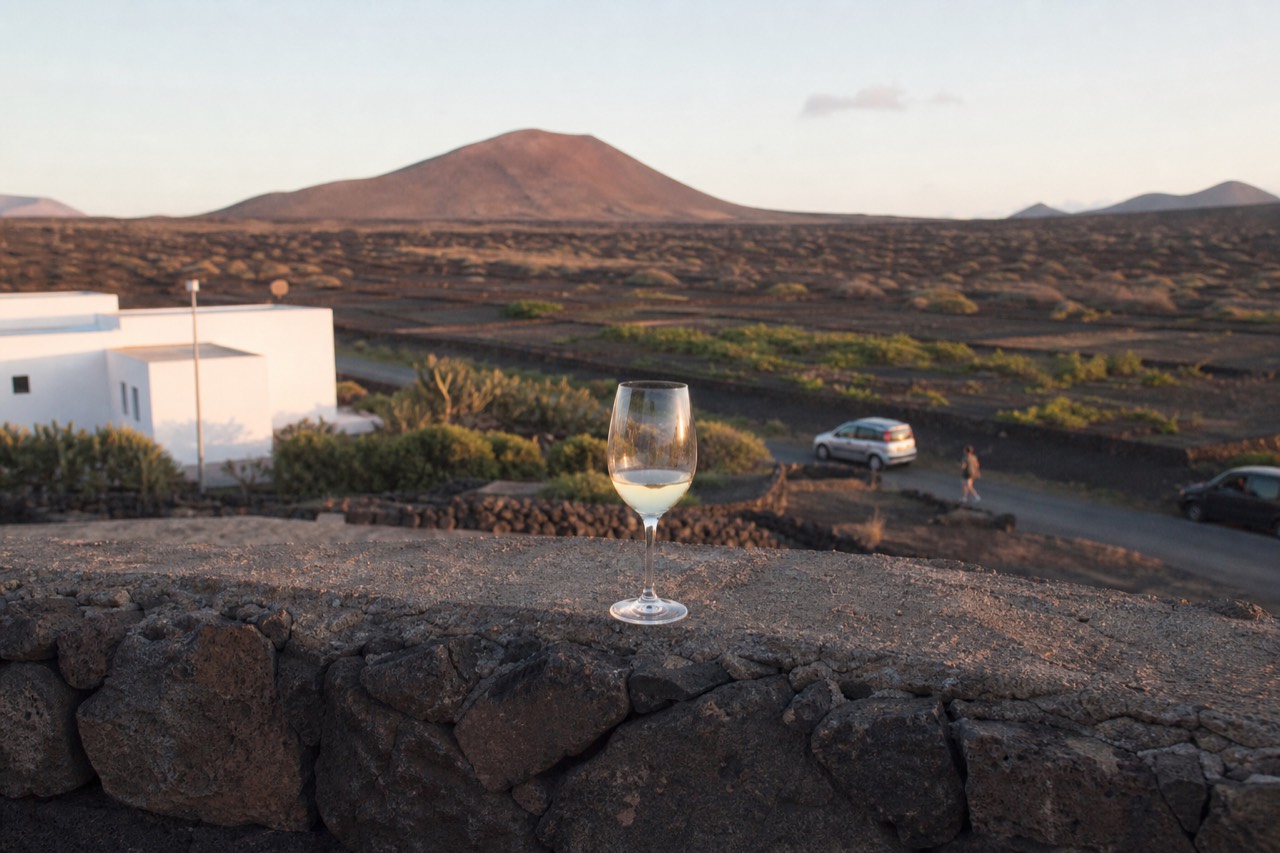
The strongest single answer on record is Vega de Yuco's Princesa Gara 2022, a Malvasía Volcánica aged on lees, which took a Silver medal at the Decanter World Wine Awards 2026, a score band of 90 to 94 points, judged in London. If you want the island's most decorated style rather than one bottle, it is the sweet Malvasía: Timanfaya Malvasía Dulce Natural 2018 won Grand Gold at Bacchus 2026, the top award at that competition.
Both of those results are from 2026, both name a specific wine, a specific grape and a specific competition, and neither is marketing copy from the winery's own homepage. That matters, because "best wine from Lanzarote" is a question the island's bodegas answer enthusiastically about themselves and almost nobody else answers with evidence. This page sticks to what is documented: competition results, the official vintage qualification, and what you can actually put in your mouth on the island.
There is a catch, and it is worth stating up front. Roughly 98 per cent of what the DO sells never leaves Spain, and about 84 per cent of it is white. So the "best" wine from Lanzarote is, for most visitors, a wine they will taste on the island or carry home in a suitcase, not something they will find on a shelf at home. That is exactly why the question is best answered by what you can taste at a bodega door, which is how this page approaches it. For a broader rundown of grapes and styles, see what wine Lanzarote is famous for.
The other piece of context is scarcity. The 2025 harvest brought in 843,000 kilos of grapes and produced 1,502,656 bottles, one of the smallest crops in years, and the vintage was still officially qualified "muy buena", very good, after a blind tasting of 23 wines. Yields in La Geria run around 1,000 kg per hectare against a legal ceiling of 7,000. There simply is not much of any given bottle, which is part of why the awards carry weight: the wines are competing internationally on tiny volumes.
If you want to taste the island's volcanic whites where they are made, with a Canarian food pairing alongside, the tasting most directly aimed at that question is the natural-wines experience in La Geria itself:
The three options above cover the range: a single-bodega pairing tasting at the volcanic end, the El Grifo cheese-tasting visit at the historic end, and a full-day four-winery tour for people who want to taste across the island before deciding on a favourite.
Which Lanzarote Bottles Have The Strongest Award Record?
Three results stand out for 2026. Princesa Gara 2022 from Vega de Yuco took Silver at the Decanter World Wine Awards, 90 to 94 points, praised for typicity, acidity and mineral character. Timanfaya Malvasía Dulce Natural 2018 took Grand Gold at Bacchus 2026, the competition's top award. El Grifo announced two gold medals at Mundus Vini 2026 on its own news page. Together they cover the island's three most decorated producers.
The Decanter result is the most useful for a visitor because it comes with a tasting note. Princesa Gara 2022 is a single-varietal Malvasía Volcánica aged on lees, and the judges' praise for its mineral character is precisely what people mean when they describe volcanic wine. Its sibling, Princesa Fayna Brut Nature 2019, a traditional-method sparkling with long ageing, took a Bronze at the same competition, which makes Vega de Yuco the only Lanzarote producer with two Decanter 2026 medals.
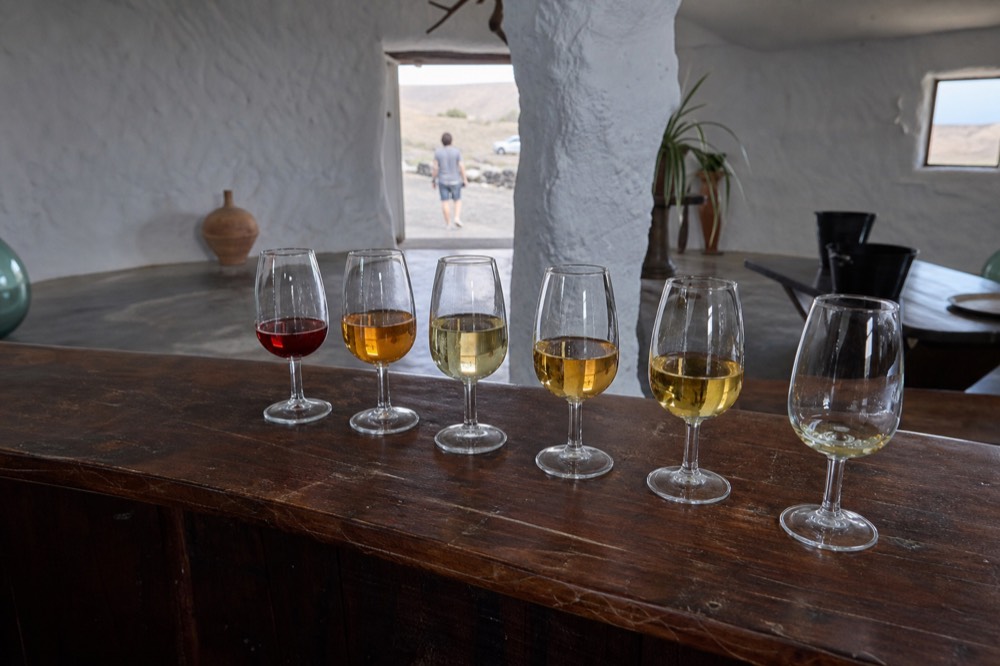
The Bacchus result points at a different style. Timanfaya Malvasía Dulce Natural 2018, a naturally sweet wine from Malvasía Volcánica, won Grand Gold at the 24th edition of the competition run by the Spanish Union of Tasters in Madrid, and Princesa Fayna sparkling 2019 took a Gold at the same event. The same Timanfaya sweet wine also took a Gold at VinEspaña, reported locally, and the 1999 Moscatel Reserva from the same house took Grand Gold at VinEspaña 2025. This is a producer with a consistent record in the sweet and fortified end of the spectrum.
El Grifo, founded 1775 by the inscription on its own wine press, announced two gold medals at Mundus Vini 2026. It also closed its 250th anniversary year with an official visit from the Spanish agriculture minister, and received the Canary Islands Tourism Award for Tourist Excellence 2025, which is a wine-tourism award rather than a wine award, but it says something about how the winery presents itself to visitors. Its Rosado de Lágrima 2025, a Listán Negro rosé, was reviewed warmly in the Spanish press, described as elegant, mineral and delicate.
A summary table of the strongest documented results:
| Wine | Producer | Result | Competition |
|---|---|---|---|
| Princesa Gara 2022 | Vega de Yuco | Silver, 90-94 pts | Decanter World Wine Awards 2026 |
| Princesa Fayna Brut Nature 2019 | Vega de Yuco | Bronze | Decanter World Wine Awards 2026 |
| Malvasía Dulce Natural 2018 | Bodegas Timanfaya | Grand Gold | Bacchus 2026 |
| Princesa Fayna 2019 | Vega de Yuco | Gold | Bacchus 2026 |
| Two gold medals | El Grifo | Gold | Mundus Vini 2026 |
One honest note for anyone comparing islands: at the Canaries' own official 2026 competition, the top wines came from Tenerife, not Lanzarote, from a field of 251 wines entered by 65 bodegas. A page that admits that and then explains what Lanzarote does differently, volcanic dry-farming in hand-dug pits, is more credible than one that does not. The deeper comparison lives in whether Lanzarote wine is any good.
Where Can You Actually Taste These Wines On Lanzarote?
The reliable way is at the bodegas themselves. Book direct at the bodega and El Grifo's own published walk-in prices run from a 15 euro self-guided audio tour with two wines up to 50 euros for the Wine Lovers tour, or 95 euros with lunch. Los Bermejos pours glasses at 3.50 euros on its terrace with no booking needed, and its 40-minute guided visit with a two-wine tasting is 21 euros, both walk-in prices published by the winery itself. Rubicón lists winery-direct visits at 22 and 40 euros.
That price spread is worth knowing because it means "taste the best wine" does not have to mean "book the most expensive experience". The Los Bermejos terrace is the cheapest way to try several of the island's 13 current references side by side, and the guided walk through the press room and barrel room ends with you choosing your own two wines. El Grifo, by contrast, is the deepest single visit: a real wine museum in an 18th-century winery, 19th-century Moscatel vines still standing outside, and tastings that go up to six wines with Canarian cheeses.
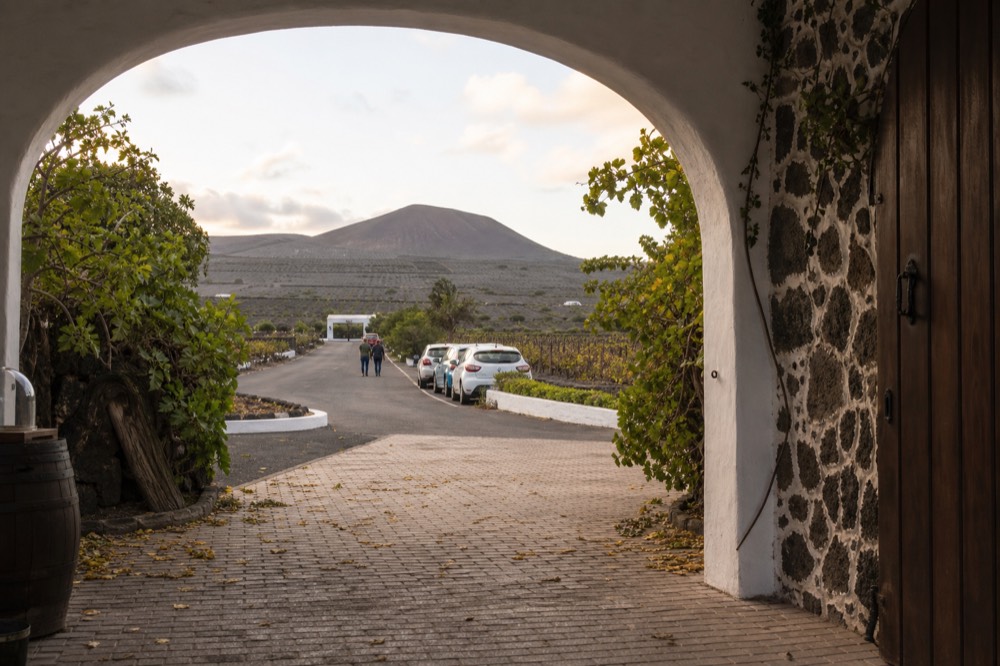
For the award winners specifically, the practical point is that Vega de Yuco and Bodegas Timanfaya are working wineries rather than visitor attractions on the El Grifo scale. Their bottles, including Princesa Gara and the Malvasía Dulce Natural, circulate through the island's bodega shops and tasting rooms, and a multi-winery tour is the most efficient way to encounter several producers' pours in one afternoon. The three-wineries tour, capped at 8 travellers, pours six wines across three bodegas with a goat cheese tasting, from $105.
The pairing tasting in La Geria is the one most directly built around the question this page asks: natural volcanic wines served with an artisanal cheese and seasonal Canarian plate, in groups of 10 or less, from $94, currently rated 5 across 5 reviews. It sits in the heart of the protected landscape, so the wine in the glass and the view out of the window are the same story.
Every tour on the island's roster offers free cancellation, so booking the pairing tasting ahead of your trip costs you nothing if your plans shift, and the small-group cap of 10 means the person pouring can actually answer the "which bottle should I take home" question rather than rushing a crowd through. That is a small thing, but on a question as personal as which wine is best, it is the difference between a tasting and a sales pitch.
If you are planning around a full day rather than a single tasting, the four-wineries tour adds brunch and tapas at a bar dating to 1890, from $176, rated 4.9 across 51 reviews, and it is the format that most often surfaces bottles from the smaller producers a visitor would never otherwise find.
Is The Sweet Malvasía The Island's Signature Wine?
On the evidence, yes. Malvasía Volcánica accounted for about 70 per cent of the 2022 harvest, per Consejo Regulador figures reported locally, and the island's only Grand Gold at a major 2026 competition went to a sweet Malvasía. The grape is the DO's preferred variety and comes in first at harvest every year by tradition. If you taste one style on Lanzarote, make it Malvasía.
The distinction matters because "best" and "most typical" are not quite the same question. The most typical Lanzarote wine is a dry or off-dry white Malvasía Volcánica, saline, mineral, high in acidity, grown in ash pits and drunk mostly on the island. The most awarded single bottle in 2026 was a sweet one. A fair reading is that the grape is the signature and the style is a matter of taste: the dry whites show the volcanic terroir most cleanly, while the naturally sweet wines, made from grapes dried in the sun, are the historic style the island was exporting centuries ago.
The 2025 vintage, qualified "muy buena" from that blind tasting of 23 wines, split as 11 dry whites, four rosados, four reds and four semi-sweet whites, which tells you the shape of the island's output: overwhelmingly white, with sweetness as a recognised category rather than an afterthought. And the 2026 harvest, which began in the first week of July and is forecast by the Consejo Regulador to close above three million kilos, roughly triple 2025, means more bottles of all of it will exist than in either of the last two years.
What About Sparkling And Rosado?
They are real and, in one case, award-winning. Princesa Fayna, a traditional-method sparkling from Vega de Yuco, took Gold at Bacchus 2026 and Bronze at Decanter 2026, and El Grifo sends its first pressings of each harvest to its own Brut. Rosado is a smaller category, four of the 23 wines in the 2025 qualification tasting, but El Grifo's Rosado de Lágrima 2025 drew warm press reviews.
Sparkling is the sleeper category here. The Canary Islands are not famous for it, and that is exactly why a Gold at a Madrid competition for a Lanzarote traditional-method sparkling is a genuinely interesting result: the wine beat expectations nobody had set for it. El Grifo's practice of dedicating its first fruit of each harvest to its Brut, noted in 2026 harvest coverage, tells you the producers take the style seriously rather than treating it as a sideline.
Rosado from Listán Negro, the island's main red grape, is delicate and pale rather than powerful, and the press review of El Grifo's 2025 lagrima called it exactly that. Reds are the smallest share of what the DO sells, well behind the roughly 84 per cent that is white, so treat Lanzarote red as something to discover rather than expect.
How Do You Choose If You Only Have One Tasting?
Pick by what you want to understand. To understand the grape, taste a dry Malvasía Volcánica. To understand the landscape, taste at a bodega inside La Geria with the pits visible from the terrace. To understand the island's whole range, take a multi-winery day. And if you only buy one bottle to take home, the award record points at Princesa Gara 2022 or a Malvasía Dulce Natural.
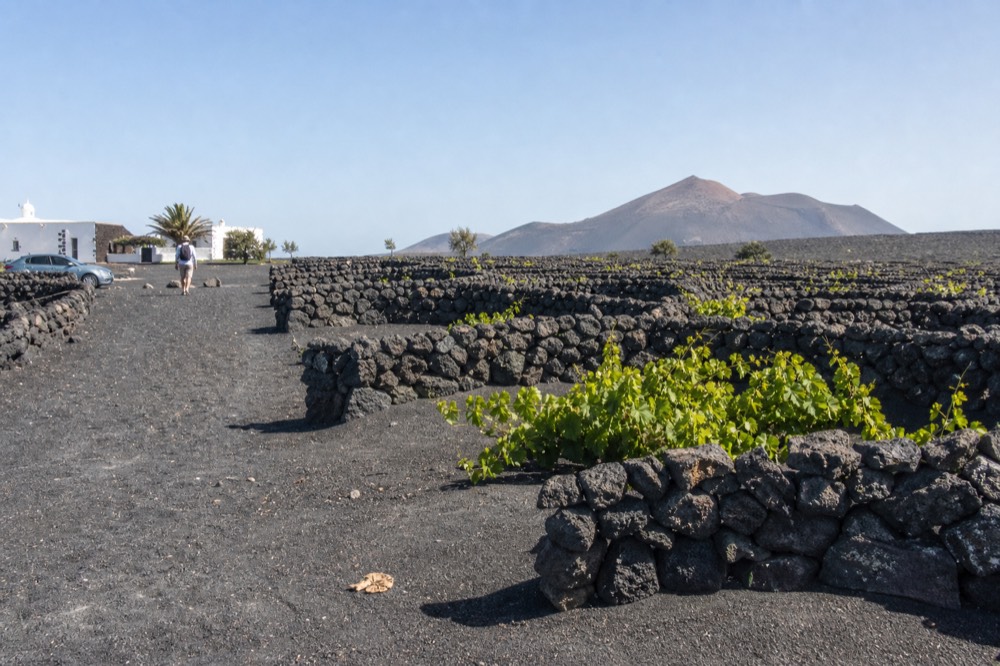
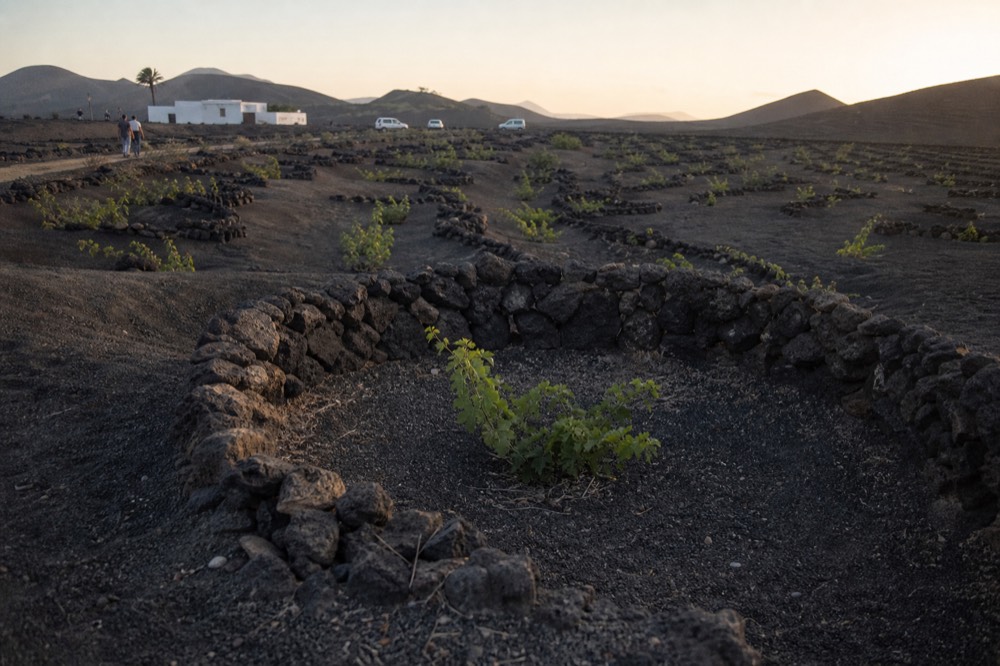
The landscape point is not decoration. Lanzarote's growing system, vines in hand-dug pits about three metres across and two to two and a half metres deep, sheltered by half-moon stone walls facing the north-northeasterly trades, was added to the FAO's Globally Important Agricultural Heritage Systems list in 2025. Tasting a wine grown that way, with the vine pits in front of you, is a different experience from tasting it anywhere else, and it is the reason the bodega-door question matters more here than the shelf question.
For visitors who want to compare before committing to a favourite, the full-day format is the efficient answer:
Whatever you taste, remember the two rules that shape every Lanzarote tasting: you must be 18, with no parental-consent exception in the Canary Islands, and if you are driving, Spain's breath limit is 0.25 mg/l, lower than the UK's 0.35, with 0.15 for a minibus driver. A tasting flight will not leave most people comfortably under the general limit. That is the honest, sourced case for a driven tour, and it is why this site, Lanzarote Wine Tours, exists. For bottles to seek out at the bodega door, the fuller list is in the guide to Lanzarote wine brands worth buying.
The short answers: the best bottle on the 2026 award record is Vega de Yuco's Princesa Gara 2022, Silver at Decanter with 90 to 94 points, and the most decorated style is sweet Malvasía, led by Timanfaya's Grand Gold winner. Malvasía Volcánica is the grape behind nearly all of it, tastings at the wineries run from a 3.50 euro glass to a 95 euro lunch experience, and almost none of it is exported, so the island is where you taste it.
Common Questions About The Best Wine From Lanzarote
What Is The Best Wine From Lanzarote?
On the award record, Vega de Yuco's Princesa Gara 2022, a Silver medalist at the Decanter World Wine Awards 2026 with 90 to 94 points, and Timanfaya's Malvasía Dulce Natural 2018, a Grand Gold winner at Bacchus 2026. Both are Malvasía Volcánica, the grape that dominates every harvest.
What Grape Is Lanzarote Wine Made From?
Mostly Malvasía Volcánica, which accounted for about 70 per cent of the 2022 harvest per Consejo Regulador figures reported locally. Listán Blanco, Listán Negro, Diego and Moscatel de Alejandría are the other names to look for. About 84 per cent of what the DO sells is white.
Can I Buy These Wines Outside Spain?
Only with difficulty. Around 98 per cent of DO Lanzarote wine is sold inside Spain. Some UK merchants list Lanzarote bottles, but the reliable way to get the award winners is to buy them at the bodega on the island. See the guide to buying Lanzarote wine in the UK for the current channels.
How Much Does A Tasting At A Lanzarote Winery Cost?
At the wineries' own doors: El Grifo from 15 euros for an audio tour with two wines up to 95 euros with lunch; Los Bermejos 21 euros for the guided visit, or 3.50 euros a glass on the terrace; Rubicón 22 and 40 euros. Booked tours with transport run from $28 to $176.
Is Lanzarote Sweet Wine Or Dry Wine Better?
Neither is "better": the dry whites show the volcanic mineral character most clearly, while the naturally sweet Malvasías carry the historic style and the island's only Grand Gold at a major 2026 competition. Most tastings pour both, so try each before deciding.
Are Lanzarote Sparkling Wines Worth Trying?
Yes. Princesa Fayna, a traditional-method sparkling from Vega de Yuco, took Gold at Bacchus 2026 and Bronze at the Decanter World Wine Awards 2026, and El Grifo dedicates the first pressings of each harvest to its own Brut. It is an underrated category on the island.