What Does Volcanic Wine Taste Like In Lanzarote?
An honest tasting answer to the volcanic wine question: salinity, smoke and minerality claims tested against what is actually verified, plus how Lanzarote compares with Santorini and Etna.
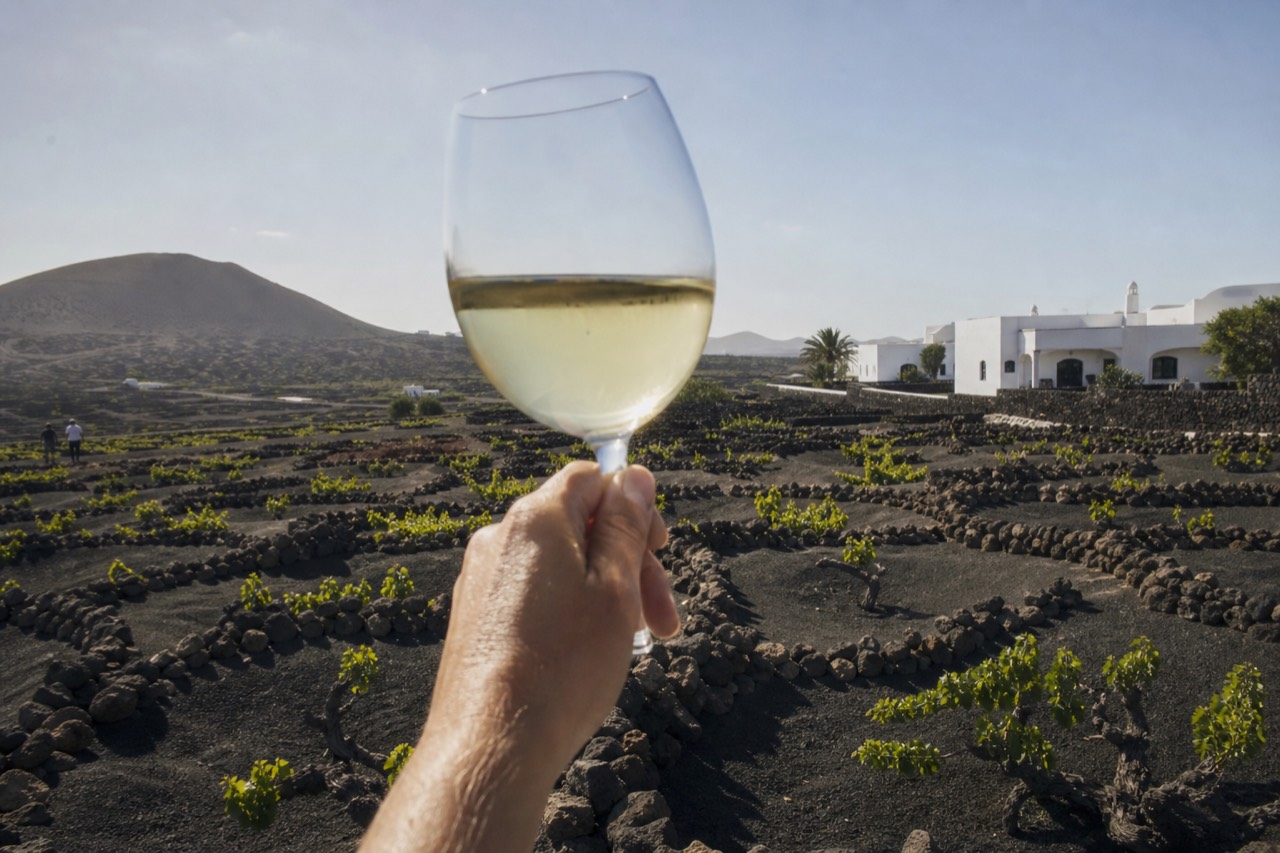
What Does Volcanic Wine Taste Like?
Volcanic wine generally tastes dry, high in acidity, lean in body and faintly saline, with a stony, chalky finish that tasters call minerality rather than fruit sweetness. In Lanzarote the dominant style is a white from Malvasía Volcánica, and the island's own award notes point to typicity, acidity and mineral character rather than smoke or salt.
That is the honest one-line answer, and it comes with a caveat worth stating up front: "volcanic" is not a flavour. Grapes do not taste like lava. What the term actually describes is a set of vineyard conditions, young broken-down rock, low fertility, heat retention and very little water, that push vines toward small berries, thick skins and high acid. The wine that results tends to read as tense and savoury rather than rich and fruity.
Lanzarote is an extreme case even within that category. The vines grow in pits dug through black lapilli, the ash layer laid down by six years of eruptions between 1730 and 1736, and the appellation permits 7,000 kg of grapes per hectare while La Geria actually yields around 1,000. Stress concentrates flavour. Small crops from old, stressed vines are exactly where the saline, mineral profile shows up most clearly.
The scale of the stress is worth pausing on, because it explains why the profile is so consistent. In the deepest-ash part of La Geria there are around 36 vine pits to a hectare, each one hand-dug roughly three metres across and two to two and a half metres deep to reach the buried pre-eruption soil. A conventional vineyard runs to thousands of vines in the same space. Every one of those pits is a farmer's bet that a single vine, roots driven deep into old soil under a blanket of ash, will produce a small amount of intensely flavoured fruit. The tasting profile of the island is the direct result of that arithmetic.
If you want to test the claim on your own palate rather than take a tasting note's word for it, the fastest route is a guided tasting in La Geria itself. These are the three we would point people at first:
Where Do The Smoky, Salty Claims Come From?
The smoke claim is mostly borrowed imagery from the terroir, not a verified flavour, while the salinity claim has real support in how volcanic soils and sea winds shape the wine. Neither word appears in the appellation's own technical description of its wines, which emphasises acidity and mineral character instead. Honest answer: expect saline and stony, not smoky.
The vocabulary of "volcanic wine" was largely built by writers covering Santorini and Etna, and international press now groups the Canary Islands with those regions. A Wine Enthusiast region rundown published in January 2026 positions Canary volcanic wines alongside Etna and Santorini, and Jancis Robinson's site ran a piece on volcanic island wines in April 2026 discussing how nutrient stress in volcanic soils shapes the glass. Both are press framing, not appellation claims, and both are worth reading as framing rather than proof.
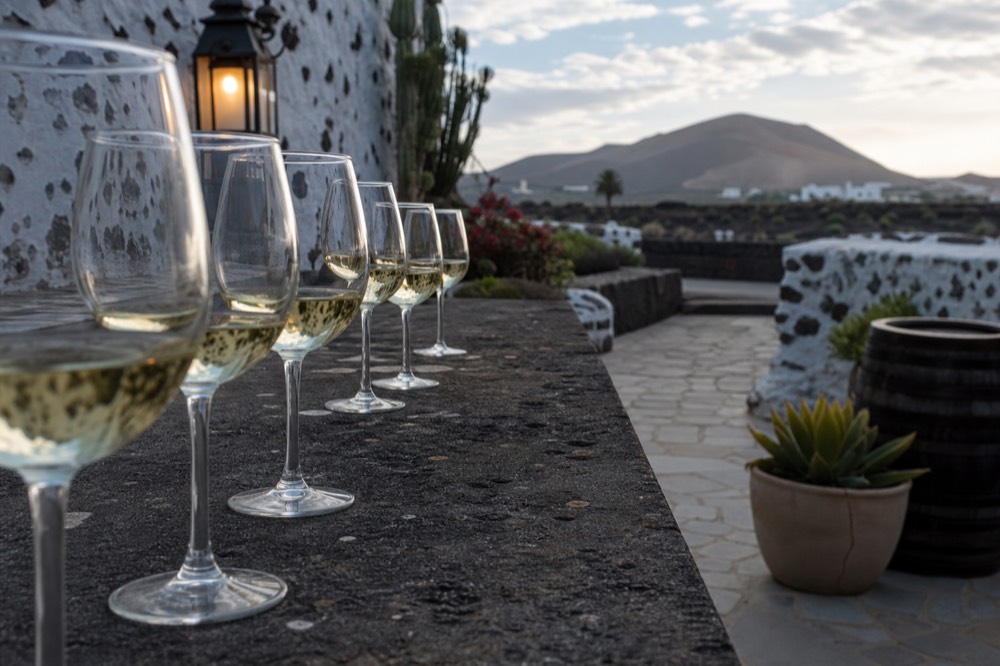
Here is how the three big claims stand up against what is actually documented for Lanzarote:
| The claim | What holds up | What to be skeptical about |
|---|---|---|
| Saline, savoury character | High acidity and a dry, stony finish are consistently noted in award write-ups, including Decanter's 2026 tasting note on a Lanzarote white | Nobody has published a measured salt content for a Lanzarote wine; "saline" is a taster's metaphor |
| Smoky or ashy flavours | The vineyard genuinely sits on ash from the 1730-1736 eruptions | The appellation's own specification credits the ash layer with water and temperature effects on the vine, not flavour compounds in the grape |
| Minerality | The DO's award notes repeatedly praise mineral character and typicity | "Minerality" is contested even among wine scientists; grapes cannot absorb rocks |
The geology part is real and worth understanding before you taste. The lapilli layer, called picón locally, lets the island's scarce rain soak straight through to the buried soil, cuts evaporation and keeps root-zone temperature steady. That is the appellation's own technical description. What it means for the glass is vines that ripen slowly and hold acid, which is where the dry, stony profile comes from. The ash does not taste of anything. The story that picón "collects dew from the air" is a popular myth, and the appellation's own specification does not make that claim.
There is a second, quieter reason the wines read as savoury rather than fruity: water scarcity. The island gets under 150 mm of rain a year, effectively none between June and August, and the vines are dry-farmed, out of necessity in a place of scarce rain. Dry-farmed vines anywhere in the world tend toward concentration over volume, and on Lanzarote the effect is compounded by the constant trade wind that the half-moon stone walls exist to block. Add the island's mean temperature of 20 degrees and a diurnal swing that can reach 17 degrees in a single day, and you get fruit that ripens fully while keeping its acid, which is the structural signature of every good glass from the DO.
One practical note for planning a tasting day: Spain's drink-drive limit is 0.25 mg per litre of breath, lower than the UK's 0.35, and a professional driver's limit is 0.15. A tasting flight will not leave most people confidently under that, which is a real, sourced reason to book a driven experience or take a taxi rather than self-drive between bodegas. Every tour on our roster includes free cancellation, so booking ahead costs you nothing if plans change.
A useful way to calibrate your expectations is to know what grapes are actually in the bottle. The dominant white is Malvasía Volcánica, and the DO also lists Diego and Listán Blanco among its permitted varieties, with Listán Negro and Syrah on the red side. Malvasía Volcánica is the variety most often behind the saline, stony profile described above, and it is the one to ask for by name if a tasting room offers a choice.
It also helps to know how the wines are classified, because the labels carry quality tiers. The DO protects white, rosé, red, overripe-grape, liqueur, sparkling and quality sparkling wines, but it carries no Crianza or Reserva designations. El Grifo, founded in 1775 according to the inscription on its own wine press, still operates as a museum and working winery. If you want to taste the claim about slow ripening and held acid in its purest form, ask for a young, unoaked Malvasía Volcánica rather than an aged tier, where barrel character can soften the stony finish the appellation is known for.
One last framing point for the tasting room: the vineyards you will walk through are a UNESCO Biosphere Reserve designation, which covers the whole island and dates from 1993. That status protects the landscape rather than certifying the wine, so treat it the way you should treat the smoke claim: real context, not a flavour guarantee.
If you want to see the geology for yourself rather than just taste it, the vineyards sit in La Geria, the wine-growing area at the heart of the island, where the hollows and stone walls are visible from the road that runs through it. The same ash that feeds the vines comes from six years of Timanfaya eruptions between 1730 and 1736, and that is the ground the DO farms today. Seeing black picón against green vines in person is the fastest way to understand why writers reach for volcanic vocabulary in the first place.
For context on scale, the DO Lanzarote appellation covers the whole island, and its wine production is small by mainland Spanish standards, which is why bottles are easier to find on the island than off it. That scarcity is also why a tasting visit is the most reliable way to try the full range of styles, from young Malvasía Volcánica to the aged tiers, in one place.
What Would A Blind Taster Actually Notice In A Lanzarote Glass?
A blind taster notices dryness, bright acidity and a chalky, saline finish before anything else, then a restrained citrus and stone-fruit core, and finally a slight waxy or fennel-like herb note that marks Malvasía Volcánica. Smoke is rarely the first thing anyone picks up. Most people guess a cool-climate coastal white, not a wine grown on an island whose DO zone spec itself classes the climate as desert.
That is the interesting thing about tasting blind: it strips away the black-ash photograph on the label and the story told at the bar, and it turns out the wine stands on its own. Lanzarote is overwhelmingly a white-wine island, roughly 84 per cent of what the appellation sells is white, and Malvasía Volcánica is the signature grape, accounting for about 70 per cent of the 2022 harvest per Consejo Regulador figures reported locally. So the typical Lanzarote glass is a dry, pale, high-acid white with that stony finish.
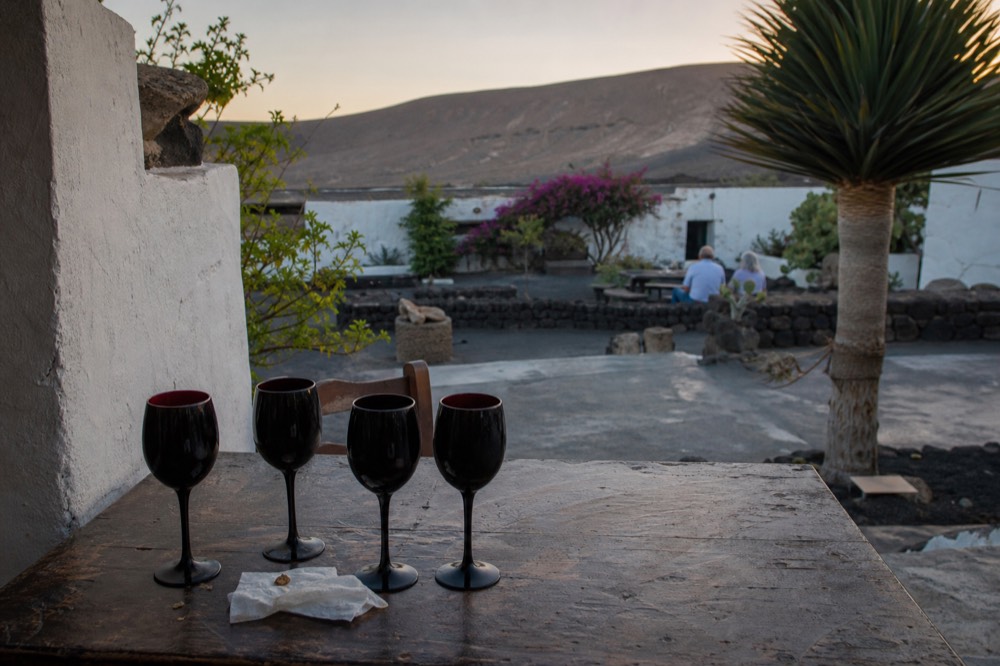
There is a tour built exactly around this question. The Blind Tasting, Ham Pairing experience at a La Geria bodega pours its flight without telling you what is in the glass, so you meet the wine before the story, with Iberian ham alongside to test how the salinity plays against cured meat. It runs 1.5 hours, costs from $41, and carries a 5 out of 5 rating from a small pool of 2 reviews, so the score is promising but thin. For a question this specific it is the most direct experiment on the island.
How Does Lanzarote Compare With Santorini And Etna?
All three share high acidity, low yields and a saline, stony profile, but Santorini's Assyrtiko is broader and more bone-dry, Etna's Nerello Mascalese is a red with tannin and volcanic grip, and Lanzarote's Malvasía Volcánica is lighter, more floral and often faintly off-dry. Lanzarote is the least known of the three and the hardest to buy outside Spain.
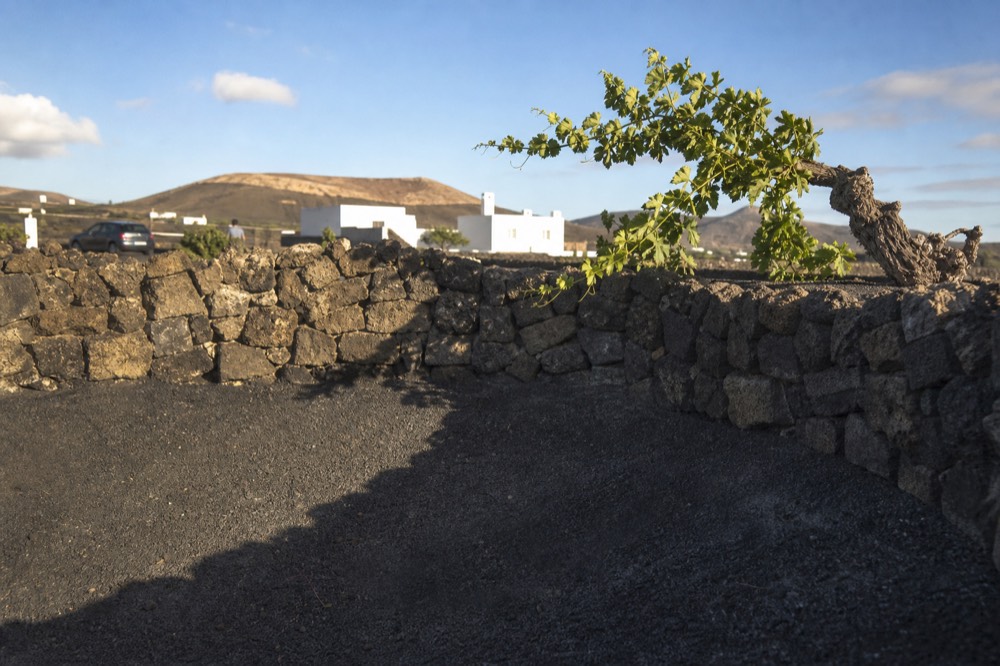
The comparison is fair because the growing logic rhymes. Santorini's vines are trained in baskets against wind, Etna's climb black slopes at altitude, Lanzarote's sit in ash pits behind half-moon stone walls. All three are low-yield, wind-battered, heat-stressed systems that trade volume for concentration. The half-moon walls in La Geria all face the same way because the trade winds come from the north-northeast, a detail you can verify from any roadside stop, and the same wind pressure is part of what keeps berry size down and acid up.
The differences show up in the glass. Assyrtiko from Santorini tends toward lime, beeswax and a hard saline snap. Etna reds lean into red fruit, ash and grippy tannin. Malvasía Volcánica sits between: floral on the nose, citrus and stone fruit on the palate, and a softer, rounder saline finish. Lanzarote also makes a distinctive sweet style, the Malvasía Dulce Natural, which took that Grand Gold at Bacchus 2026, and it is nothing like the dry whites Santorini is famous for.
The honest differentiator is scarcity. Around 98 per cent of DO Lanzarote never leaves Spain, against Greek and Italian volcanic wines with global distribution. If you want to run the comparison yourself, the cheapest place to do it is on the island, in the tasting room, rather than hunting bottles at home. The Natural Wines, Canarian Pairing tasting is the strongest single session for this: an artisanal cheese and seasonal Canarian plate with the flight, in groups of 10 or fewer, from $94 for 1.5 hours, rated 5 out of 5 from 5 reviews.
Which Bottles Show The Volcanic Character Best?
Start with a dry Malvasía Volcánica, because that is the grape and the style the island's medals are actually awarded to: Vega de Yuco's Princesa Gara 2022 took Silver at Decanter 2026, and its Esencia Yaiza, a Listán Negro red, took Gold at the International Volcanic Wine Awards 2025. Then try a Malvasía Dulce Natural for the sweet contrast. Those three glasses cover the whole volcanic range.
The medal record gives you a shortcut that no tasting note can. Princesa Gara 2022 is the most decorated Lanzarote wine of 2026, with Silver at Decanter and further recognition at CINVE 2026, and it is a single-varietal Malvasía Volcánica aged on lees, which is the textbook expression of the style. El Grifo, the 1775-founded bodega, took two golds at Mundus Vini 2026, and its Malvasía Colección range is listed by some UK merchants if you want a before-and-after bottle at home.
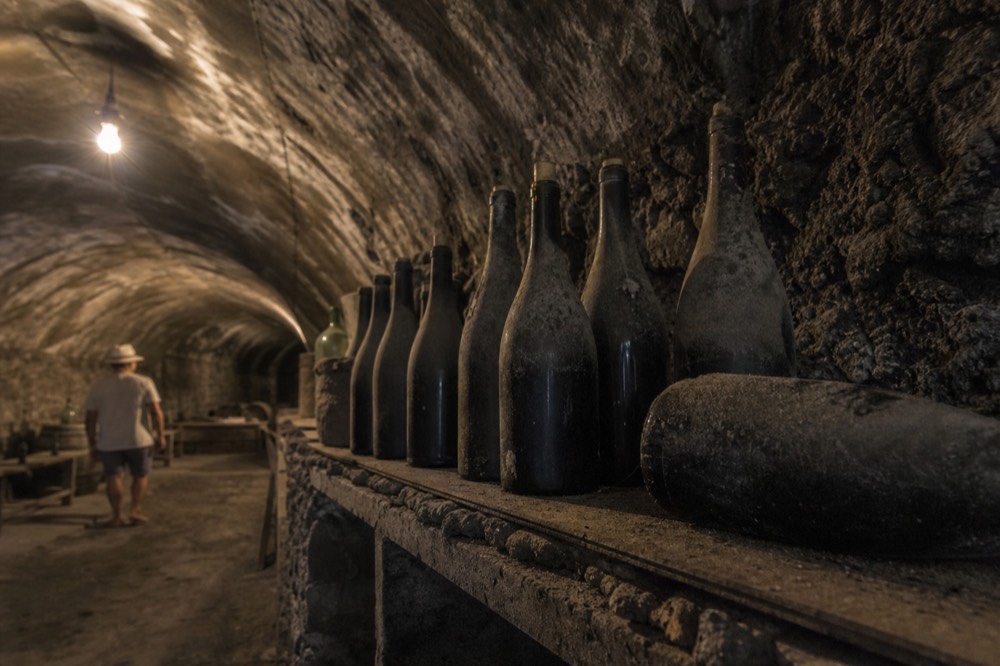
For a fuller picture of what to taste and what it costs, our guide to the best Lanzarote wine brands worth buying breaks the bottles down by style and price, and the question of whether Lanzarote wine is any good runs the quality evidence in full. If the geology is what drew you in, the piece on how Lanzarote grows wine in volcanic ash explains the pits, the walls and the ash layer in detail. This site, Lanzarote Wine Tours, exists because the tasting question and the landscape question turn out to be the same question.
One last framing thought before you book anything. The volcanic taste is real, but it is subtle, and it is better as a second impression than a first. Go in expecting a dry, acidic, savoury white with a stony finish and you will find it. Go in expecting smoke and you may taste the story instead of the wine. Tasting blind, or at least tasting before anyone tells you about the 1730 eruption, is the only way to know which one you are actually perceiving.
If that has settled the question and you want a session in the ash itself, these are the three tastings we would choose:
The short answers: volcanic wine tastes dry, acidic and faintly saline with a chalky finish, the smoke claim is borrowed imagery, the salt claim is a metaphor for acidity and texture, and Lanzarote's version is a lighter, more floral white than Santorini's or Etna's. The questions below cover the details, including which bottle to taste first and how to run the experiment blind.
Common Questions About Volcanic Wine
What Does Volcanic Wine Taste Like?
Dry, high in acidity and lean in body, with a chalky, saline finish that tasters call minerality. In Lanzarote the dominant expression is a Malvasía Volcánica white with restrained citrus and stone fruit and a stony, savoury close. Smoke is a common expectation but rarely the first thing a blind taster notices.
Is Volcanic Wine Actually Salty?
No measured salt content has been published for a Lanzarote wine, so "salty" is a taster's metaphor for the dry, savoury, saline impression rather than a chemical fact. The impression is real and consistently noted, including in Decanter's 2026 tasting note on a Lanzarote white, but it comes from acidity and texture, not dissolved salt.
Does The Volcanic Ash Make The Wine Taste Smoky?
The ash affects the vine, not the flavour compounds in the grape. The appellation's own specification credits the lapilli layer with fast rain infiltration, reduced evaporation and steady soil temperature, which produces slow ripening and high acid. Smoky descriptors are borrowed imagery from the landscape.
How Does Lanzarote Wine Compare With Santorini And Etna?
All three share high acid, low yields and a saline, stony profile. Santorini's Assyrtiko is broader and bone-dry, Etna's Nerello Mascalese is a tannic red, and Lanzarote's Malvasía Volcánica is lighter and more floral, with a distinctive sweet Malvasía Dulce Natural style alongside the dry whites.
Which Lanzarote Wine Should I Taste First?
A dry Malvasía Volcánica. Vega de Yuco's Princesa Gara 2022, which took Silver at the Decanter World Wine Awards 2026 with 90 to 94 points, is the most decorated current example, praised for typicity, acidity and mineral character. Then try a Malvasía Dulce Natural for the sweet contrast.
Can I Taste Lanzarote Wine Blind, Without Being Told What It Is?
Yes. The Blind Tasting, Ham Pairing experience in La Geria pours a flight without revealing the wines, with Iberian ham alongside. It runs 1.5 hours from $41 and is the most direct way to test the volcanic-taste claim on your own palate.