Is Lanzarote Cheap Or Expensive?
An honest cost breakdown of a Lanzarote holiday: hotel rates, winery tastings, sightseeing entry fees, food and transport, with verified figures and the cheap ways to do the island well.
Is Lanzarote Cheap Or Expensive?
Lanzarote is mid-priced by Canary standards and getting pricier: hotel rates averaged 142.40 euros a night in 2025, up 6.12 per cent in a single year, while winery tastings still start at 15 euros and the cheapest bookable wine tour on the island costs 28 dollars. There is no tourist tax. The honest answer is that the island is cheap at the edges and expensive in the middle.
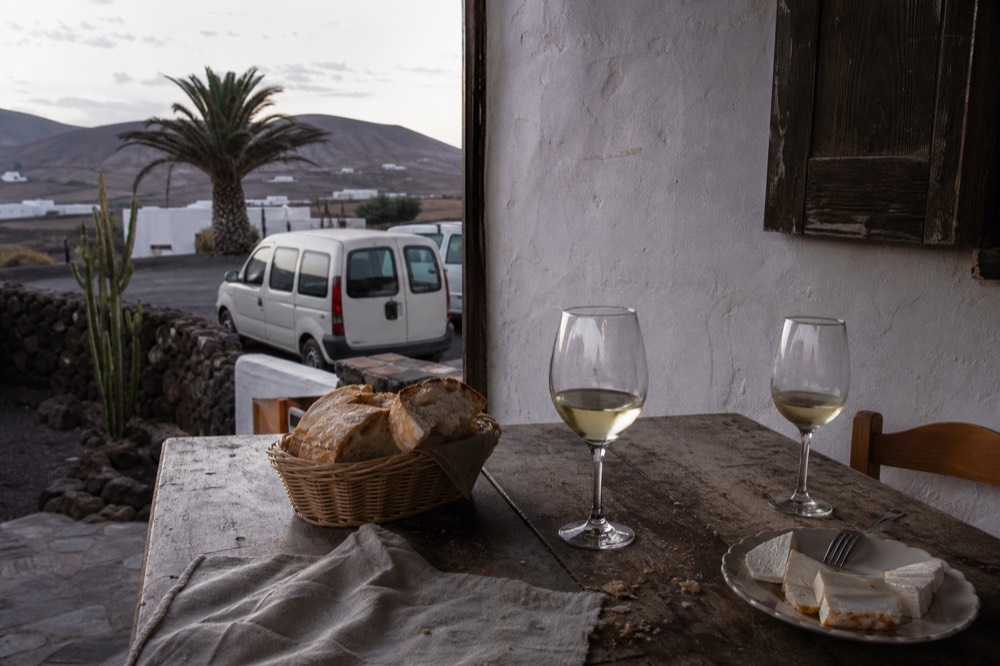
The middle is the bed. Lanzarote's hotels took 801 million euros in 2025 on 86.8 per cent occupancy, which means rooms fill and prices hold. The edges are everything you do once you are out of the room: a glass of wine with cheese on a winery terrace is 3.50 euros, the Casa Museo del Campesino is free, and the island is small enough that you are never more than about half an hour's drive from the wine country, so transport costs stay modest.
What follows is a line-by-line breakdown of what a Lanzarote holiday actually costs, with real figures instead of the vague "it depends" most cost articles settle for. Flights vary too much by origin to quote honestly, so this page starts at the hotel door. If you want the list of things that cost nothing at all, that is a separate piece: free things to do in Lanzarote wine country. If your question is what wine itself costs, by the bottle or the glass, see is wine expensive in Lanzarote.
For the wine side of the trip, these are the three best value-for-money products on the island right now.
What Does A Hotel Or Apartment Cost In Lanzarote?
The island's hotels averaged 142.40 euros a night in 2025, up from 133.68 euros in 2024, an increase of 6.12 per cent in one year, at 86.8 per cent occupancy. Hotels and apartments together took in over 1,021 million euros. Revenue rose even though guest numbers fell slightly, which tells you the price rises are sticking.
That 142.40 figure is a hotel average across the island, not a budget and not a quote. It is the single most useful cost benchmark on file because it comes from the island's own hotel trading data rather than from a travel blogger's sample of two bookings. The story underneath it is that rooms got more expensive faster than the island got busier: hotels received 1.77 million guests in 2025 against 1.79 million the year before, and still earned 3.5 per cent more.
Two practical readings follow. First, travelling outside the peak weeks is the biggest single saving available on this island, because occupancy above 86 per cent leaves hotels little reason to discount. Second, the resort you choose matters less than you might think, because every major base, Puerto del Carmen, Costa Teguise and Playa Blanca, sits within roughly half an hour of La Geria by road. You are not paying a premium to be near the wine country; nobody is.
There is no tourist tax to budget for. Repeated ecotasa proposals have been debated in the Canary Islands and none has been adopted, so as things stand nothing is added to your bill at the airport or your hotel for the privilege of visiting. A voluntary contribution fund was reported in mid-2026 as an alternative to a compulsory levy, but it is exactly that, voluntary, and it does not change what a holiday costs.
What Does A Winery Tasting Cost?
Direct at the winery, tastings run from 3.50 euros a glass at Los Bermejos to 15 euros for El Grifo's audio tour with two wines, 22 euros for Rubicón's guided tour with cheese, and 95 euros at the top for El Grifo's tour with a full lunch. Booked tours with transport start at 28 dollars. Tastings are the cheapest substantial activity on the island.
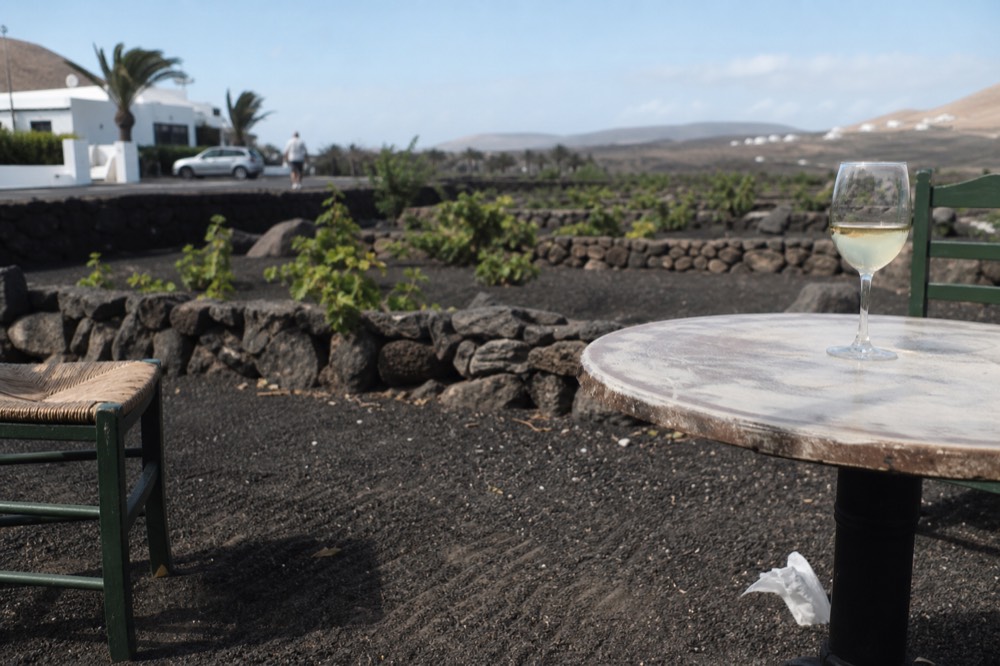
The wineries publish their own prices, which makes this the most transparent part of a Lanzarote budget. Los Bermejos in San Bartolomé pours glasses at 3.50 euros each with a cheese cap on its terrace, no booking needed, Monday to Friday in the morning and early afternoon. Its guided visit with a two-wine tasting and goat cheese is 21 euros per person. El Grifo, founded in 1775, runs a self-guided audio tour of its wine museum with a two-wine tasting for 15 euros, free for children up to 17, and climbs to a 50-euro Wine Lovers tour or a 95-euro version with a 90-minute lunch. Rubicón's 45-minute tour with two wines and island cheeses is 22 euros, with a 40-euro deeper option on Mondays and Fridays.
| Winery | Cheapest option | Top option | Booking |
|---|---|---|---|
| El Grifo | 15 euros, audio tour plus 2 wines | 95 euros, tour, 6 wines and lunch | On the winery's own site |
| Bodegas Rubicón | 22 euros, guided tour plus 2 wines and cheese | 40 euros, El Legado tour plus tank sample | On the winery's own site |
| Los Bermejos | 3.50 euros per glass on the terrace | 21 euros, guided visit with tasting | Terrace walk-in, tour by appointment |
| Bodega La Geria | Price on the booking widget | Price on the booking widget | Released 12 days ahead |
| Stratvs | Price not published | Price not published | Daily tours, about one hour |
The cheapest structured wine experience you can book is the chocolate pairing tasting at 28 dollars for 90 minutes, rated 4.8 across 482 reviews, and it is flagged as likely to sell out. That is the floor of the bookable market, and it undercuts most single winery guided tours once you factor in getting there.
What Do The Big Sights Cost?
The CACT centres run from free to 30 euros: the Casa Museo del Campesino costs nothing, Jardín de Cactus and Mirador del Río are 9 euros each, Cueva de los Verdes and Jameos del Agua are 17 euros, and Montañas del Fuego at Timanfaya is 30 euros, children under 7 free everywhere. There is no combined multi-centre ticket, each centre is priced separately.
These are the island's signature sights, the visitor-centre network built around César Manrique's work and the Timanfaya volcanic route, and the prices are published by the Cabildo's own centres operator. Almost nobody does the full sweep of all six paying centres in one trip, and the sensible picks depend on your interests. The wine-inclined visitor should not skip the Casa Museo del Campesino, which is free and sits at the Monumento al Campesino junction where the LZ-30 wine road begins: it is the interpretive anchor for the farming landscape you are about to drive through. Timanfaya itself was Spain's fourth most visited national park in 2024, with just under 1.5 million visits, which is part of why the timed-entry system exists at all.
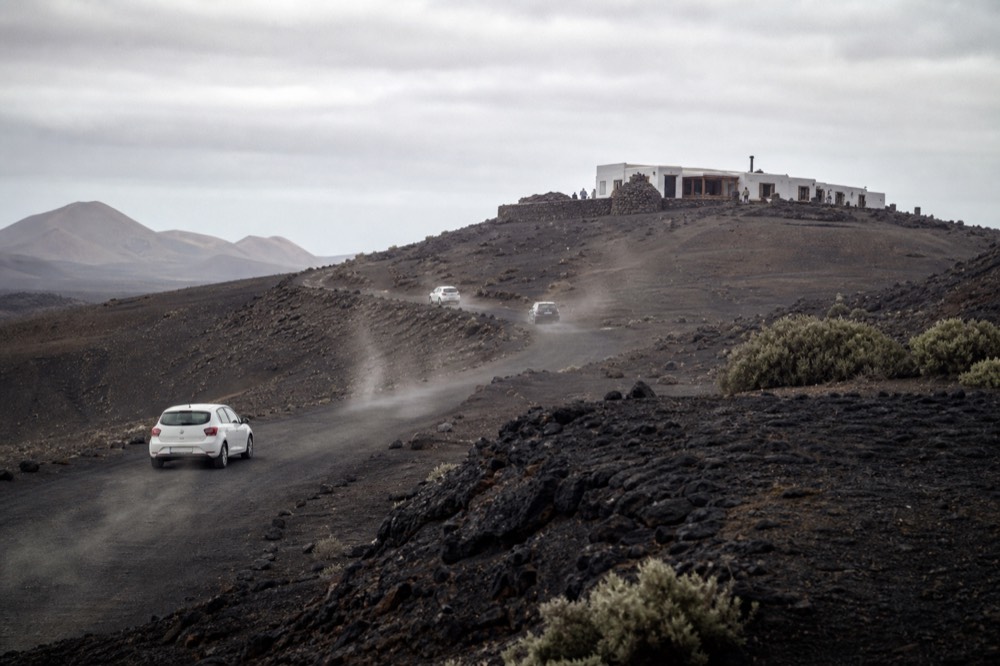
One rule has changed how a Timanfaya visit must be planned, and it affects your budget in time rather than money: Montañas del Fuego sells no tickets at the gate. The centres operator's own tariffs page states that tickets must be bought online in advance with a chosen date and time slot, arriving 15 minutes early. If a slot is not offered, that quota is full. The casual "drive to Timanfaya after the winery" itinerary is dead; you now book a slot and build the day around it, or you take a guided excursion that already holds the entry. Cueva de los Verdes works the same way. The other centres still sell at the door.
What About Eating Out And Getting Around?
Lanzarote is cheap to eat out on by mainland Spanish resort standards, and cheap to drive: every resort is within about 30 minutes of La Geria, with Puerto del Carmen 14 km and Playa Blanca 24 km from the wine country by road. No verified island average for a restaurant meal exists, so treat any per-person food budget you read online, including here, as a planning range rather than a fact.
The honest position on restaurant prices is that no official cost-of-living figure for island restaurants exists for 2025 or 2026, so budget from menu prices you see on the day. What is verifiable is the structure: Kamezí in Playa Blanca holds the island's only Michelin star, per local press, a set of Bib Gourmand and Michelin-recommended entries concentrated in Arrecife, Teguise and Famara, and a large layer of straightforward Canarian bars where a meal costs a fraction of the hotel restaurants. The wineries themselves feed you cheaply: Bodega La Geria runs a bar-cafeteria, Stratvs has a restaurant daily from 12:30, and Los Bermejos serves cheese caps with its 3.50-euro glasses.
On transport, a hire car is the usual answer and the distances are small: computed road routes put Puerto del Carmen about 14 km and 17 minutes from Bodega La Geria, Playa Blanca about 24 km and 25 minutes, Costa Teguise about 28 km and 29 minutes. There is no published official distance table, so treat those as approximations, but the shape is right: no base on the island is far from anything. One cost that is easy to overlook is the drink-drive limit. Spain's general limit is 0.25 mg per litre of breath, lower than the UK's 0.35, and a tasting flight in La Geria will not leave most people confidently under it. A driven tour, or a designated driver, is not a luxury here; it is the difference between tasting five wines and tasting one. If you are weighing which paid experiences deserve the budget, the excursion guide at best excursions to take in Lanzarote covers the trade-offs.
How Do You Keep A Lanzarote Trip Cheap?
Travel off-peak, sleep where the occupancy is softest, taste at the winery door rather than through intermediaries, use the free sights, and let someone else drive on tasting days. The five biggest levers, in order of savings, are timing, room choice, self-guided tastings, the free CACT entries and driven tours shared across a group.
Timing first. With hotels at 86.8 per cent occupancy, the shoulder months are where the discount lives, and the wine calendar gives you a reason to use them: the harvest starts in July, and the Consejo Regulador's Semana Malvasía runs in early November, so both the cheapest-ish and the most interesting windows sit outside the August peak. Room choice second: the hotel average includes the top end, and the apartment sector is where a family holiday's per-night cost drops fastest.
Third, taste at the winery door. El Grifo's 15-euro audio tour, Los Bermejos' 3.50-euro terrace glasses and Rubicón's free facility access mean a full day of wine sightseeing can cost less than a single dinner. Fourth, the free entries: the Casa Museo del Campesino costs nothing, Rubicón's facilities are open free daily from 10:00 to 19:00, and the landscape itself, the pits, the zocos and the volcanoes, is visible from the LZ-30 without paying anyone. Fifth, on the days you want a real tasting, a shared driven tour amortises both the transport and the drink-drive problem across the group, and every tour on this island's roster offers free cancellation, so booking early costs you nothing if plans change.
For a mid-budget trip, the three products below cover the cheap end, the sunset version of the same format, and a brewery-plus-wine contrast that splits a group's interests. This is the selection Lanzarote Wine Tours would point a first-time visitor towards when the question is purely about cost.
The short answer to whether Lanzarote is cheap or expensive is that it is both, in predictable places: the bed is expensive and rising, at a 142.40-euro average nightly rate in 2025, while the days are cheap, with free museum entries, 3.50-euro terrace glasses and 28-dollar bookable wine tours. There is no tourist tax, and every tour on the island offers free cancellation, so the expensive parts are the ones you can plan around rather than the ones that ambush you.
A few practical notes help the arithmetic work in your favour. Because there is no tourist tax, the price you see on a room rate is closer to the price you pay than in the Balearics or many mainland cities, so the apartment savings are not clawed back at check-out. The free-cancellation policy on every tour also means you can lock in shoulder-season dates before the harvest calendar firms up and adjust later without penalty, which matters most in early November, when Semana Malvasía pulls visitors into the same few weeks.
The wine side of the budget behaves differently from the bed side. The 2025 harvest was one of the smallest in years, at 843,000 kilos producing 1,502,656 bottles, so cellar-door prices have held firm while hotel rates climbed; buying at the winery rather than through intermediaries keeps you at the producer's price rather than a marked-up one. With the 2026 harvest forecast above three million kilos, roughly triple 2025, supply pressure should ease after two short campaigns, which makes the current window a reasonable time to buy the bottles you liked on the day rather than assuming the same stock and price next visit.
Finally, treat the airport numbers as a planning signal rather than trivia. Arrecife's César Manrique airport handled 8,920,901 passengers in 2025, up 2.4 per cent, and with 3,455,200 tourists on the island overall, car-hire fleets and shoulder-season rooms in the villages around La Geria are the two things most worth reserving early. Everything else in this section, the free museum entries, the LZ-30 viewpoints, the terrace glasses, can be arranged on the day at the same price.
Common Questions About The Cost Of A Lanzarote Holiday
Is Lanzarote Cheap Or Expensive?
Mid-priced and rising. Hotels averaged 142.40 euros a night in 2025, up 6.12 per cent in a year, but winery tastings start at 15 euros direct, the cheapest bookable wine tour is 28 dollars, several major sights are free or 9 euros, and there is no tourist tax. Expensive beds, cheap days out.
Is There A Tourist Tax On Lanzarote?
No. Ecotasa proposals have been debated repeatedly in the Canary Islands and none has been adopted. A voluntary contribution fund was reported in 2026 as an alternative, but nothing compulsory is added to your bill.
How Much Does A Wine Tasting Cost In Lanzarote?
From 3.50 euros a glass with cheese on the Los Bermejos terrace, 15 euros for El Grifo's audio tour with two wines, 21 to 22 euros for guided visits at Los Bermejos and Rubicón, up to 95 euros for El Grifo's tour with lunch. Booked tours with transport start at 28 dollars.
What Is The Most Expensive Thing On Lanzarote?
The bed, by a wide margin. At a 142.40-euro average nightly rate, one hotel night costs more than a full day of winery tastings and most of the paying sights combined. Timanfaya at 30 euros is the priciest single attraction.
Do I Need To Book Timanfaya In Advance?
Yes. Montañas del Fuego sells no tickets at the gate; you must buy online with a chosen date and time slot and arrive 15 minutes early. Cueva de los Verdes works the same way. The other centres still sell at the door.
Is It Safe To Drive To The Wineries After Tasting?
Not comfortably. Spain's general breath limit is 0.25 mg per litre, lower than the UK's 0.35, and a full tasting flight will put most people over it. Take a driven tour, share a designated driver, or keep the driving day and the tasting day separate.