Is Wine Expensive In Lanzarote?
Real prices for Lanzarote wine at the bodega door, in shops and on restaurant lists, and the honest reasons island wine costs more than mainland Spanish wine at the same quality.
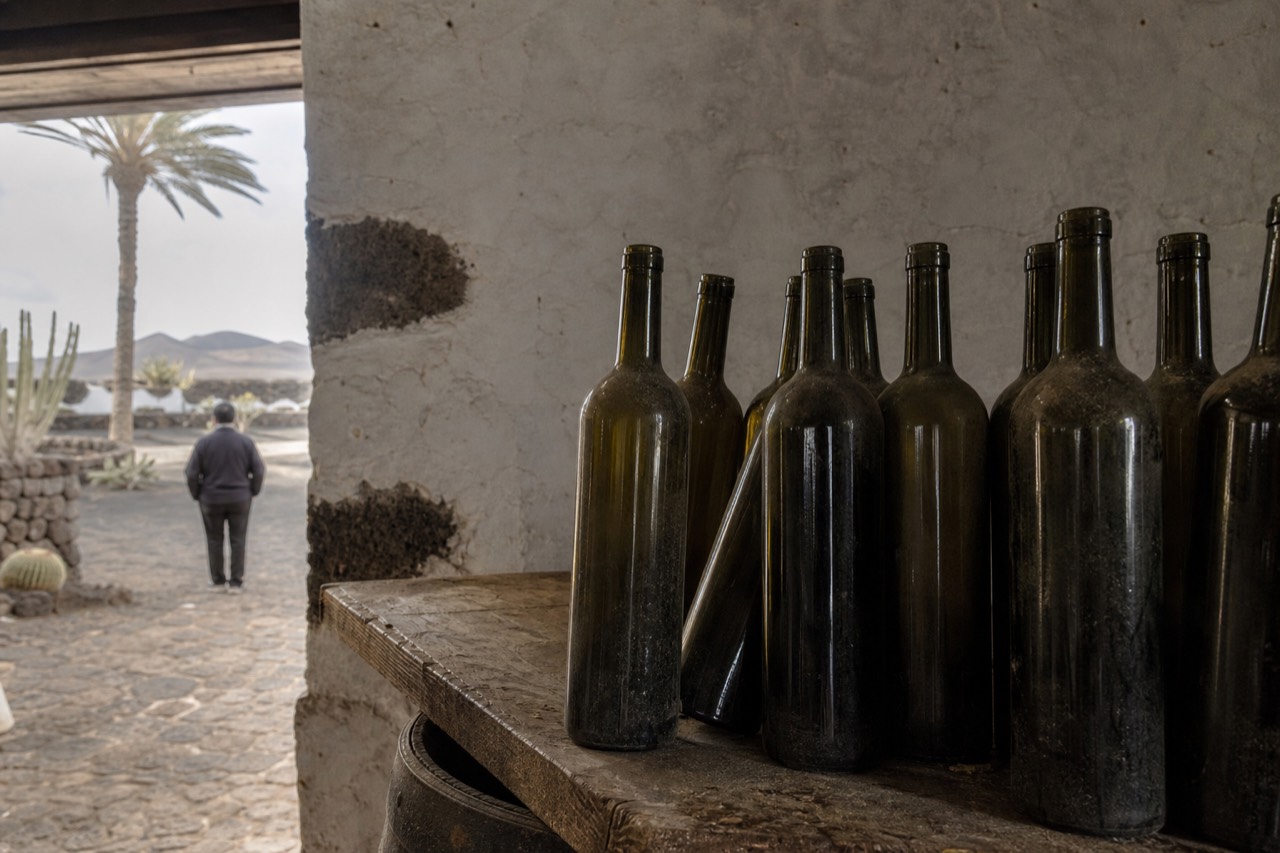
Is Wine Expensive In Lanzarote?
Yes, by Spanish standards, and the premium is real rather than tourist pricing. A bodega tasting runs from about 15 to 95 euros per person, and a guided visit with cheese at the winery door sits between 21 and 40 euros. The island's vineyards yield around 1,000 kg of grapes per hectare against a legal ceiling of 7,000, all picked by hand, so every bottle costs more to produce than comparable mainland wine.
That is the short version. The longer version splits into three questions, because "wine" on Lanzarote means three different things at three different prices: the tasting you do at the winery, the bottle you buy in a shop, and the glass you order with dinner. Each has its own economics, and only the first is fully documented by the wineries themselves.
The scarcity is genuine and worth understanding before you spend anything. In 2025 the whole island harvested 843,000 kg of grapes and produced 1,502,656 bottles. That is the entire annual output of the appellation, from 41 registered bodegas, against an island that received roughly 3.45 million tourists the same year. About 98 per cent of DO Lanzarote wine is drunk inside Spain, so what reaches a restaurant list in Puerto del Carmen or a shop shelf in Arrecife is a fraction of an already small crop.
This piece is part of Lanzarote Wine Tours, a site built around the island's wine country, and every price below comes from a winery's own published rates or an official source rather than from a brochure.
If you want the cheapest possible way to taste the island's wine with context rather than just buying a bottle, the guided options start lower than most visitors expect.
What Does A Wine Tasting Cost At The Bodega Door?
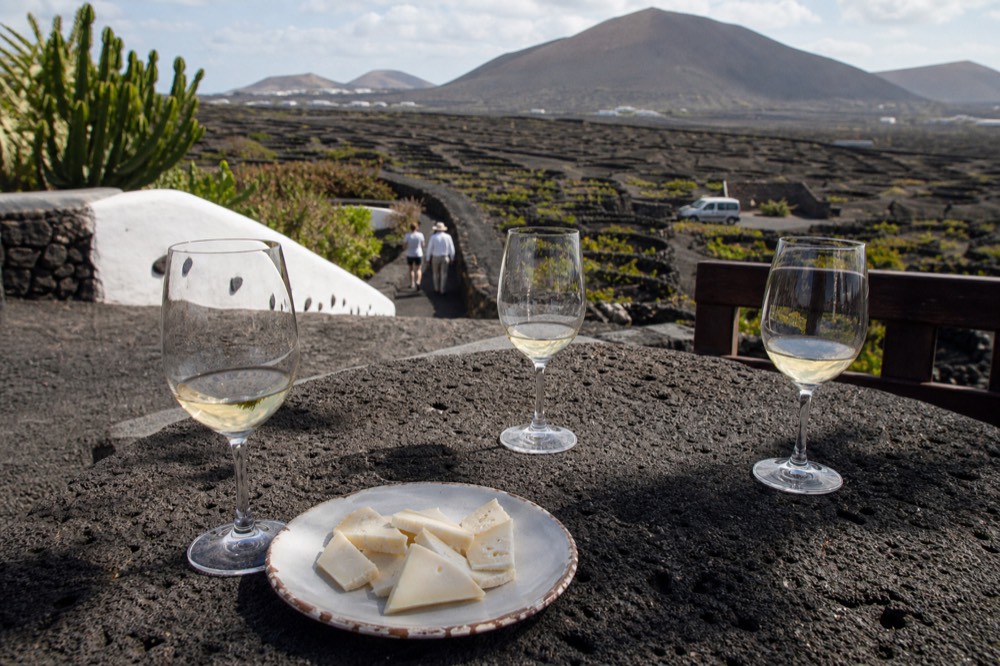
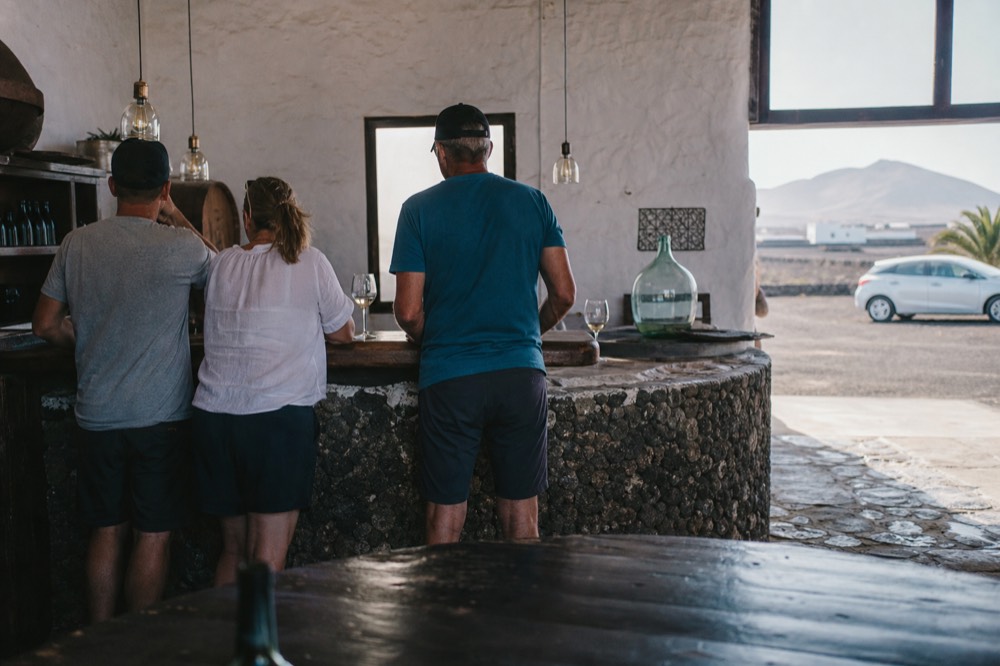
Between 15 and 95 euros per person at the wineries that publish prices. El Grifo's entry-level audio tour with two wines is 15 euros, its five-wine tasting is 30, and its full gastronomy experience with lunch is 95. Rubicón's guided tours run 22 and 40 euros. Los Bermejos charges 21 euros for a guided visit with a two-wine tasting and goat cheese, or 3.50 euros for a single glass on the terrace.
Those are the wineries' own published figures, and they are the only tasting prices that can be stated with confidence. Bodega La Geria and Stratvs do not publish a per-person price; both sit behind a booking widget, so the cost is on the listing when you go to book. Stratvs does publish its hours, daily 10:00 to 19:00, and its tours finish with three wines and artisanal Finca de Uga cheeses.
Here is the full picture of what the main visitable bodegas charge:
| Bodega | What you get | Published price |
|---|---|---|
| El Grifo | Audio tour of museum and 18th-century winery plus 2-wine tasting, 45 min | 15 euros, children up to 17 free |
| El Grifo | Guided tasting of 5 wines, 35 min, adults only | 30 euros |
| El Grifo | Wine Lovers, 120-min tour plus 6-wine tasting | 50 euros |
| El Grifo | Wine Lovers and Gastronomy, tour plus lunch | 95 euros |
| Rubicón | Entre Muros y Viñedos Centenarios, 2 wines with cheese, 45 min | 22 euros, ages 11-17 pay 5 |
| Rubicón | El Legado Rubicón, tank sample plus 3 wines with cheese, 60 min | 40 euros, ages 11-17 pay 9 |
| Los Bermejos | Guided visit, about 40 min, 2 wines with cheese and toast | 21 euros |
| Los Bermejos | Single glass on the terrace with a cheese cap, no booking | 3.50 euros |
| Rubicón | Walking into the facilities, no tasting | Free, daily 10:00-19:00 |
Rubicón's free access is worth underlining in a piece about cost. You can walk into the estate, see the courtyard and the setting inside the protected landscape, and leave without paying anything. The cheapest paid entry point on the island is Los Bermejos' terrace glass at 3.50 euros, which is a genuine tasting rather than a tourist markup. El Grifo's 15-euro audio tour includes children up to 17 free, which makes it the obvious family option.
The bookable guided tours sold through the island's operators sit in a similar band but add transport, and transport matters here for a reason covered later in this piece. The lowest-price experience on the roster is a vineyard tour with an artisan chocolate pairing at $28 for 1.5 hours, rated 4.8 across 482 reviews. A three-winery tour with transport, six wines and a goat cheese tasting runs from $105 and is capped at eight travellers.
Why Does Lanzarote Wine Cost More Than Mainland Spanish Wine?
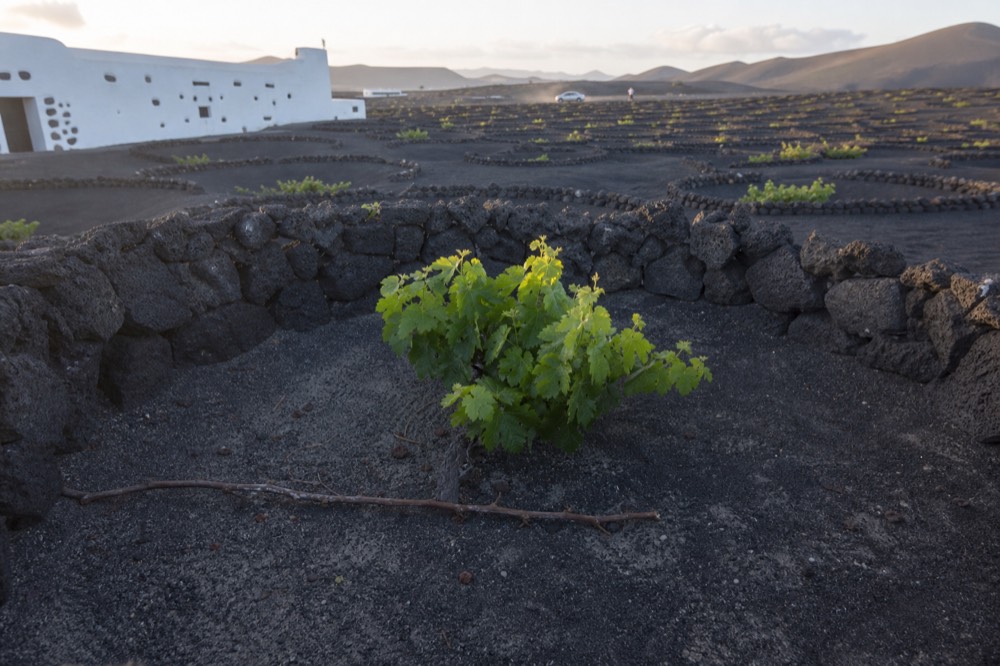
Because the economics of the hoyo system are pre-industrial. The appellation permits 7,000 kg of grapes per hectare, but La Geria actually yields around 1,000, and in the deepest-ash zone there are only about 36 vine pits per hectare, each dug by hand through volcanic ash to the buried soil. There is no tractor access, no mechanical harvest, and growers were paid about four euros a kilo in 2026.
Every step of that is from the appellation's own product specification and the protected landscape's official plan. The pits are roughly three metres across and two to two and a half metres deep, dug down to the pre-eruption soil, with a dry-stone half-circle wall built around part of each pit to shield the vine from the north-northeasterly trade winds. A conventional vineyard in Rioja or Bordeaux runs to several thousand vines per hectare. In La Geria's deepest-ash zone, the survey reproduced in the official plan counts 36 pits to a hectare, and the big pits often hold two or three vines each.
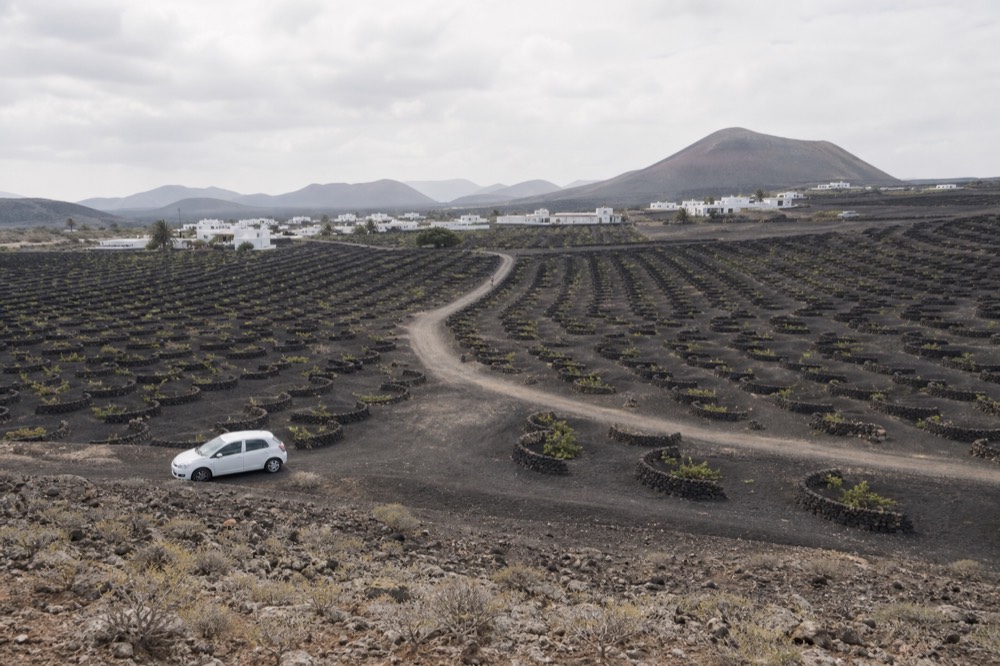
The appellation's specification describes what the ash layer does: it lets the island's scarce rain soak straight through instead of running off, it cuts evaporation from the soil beneath, and it regulates soil temperature. Under 150 mm of rain falls in a year, and effectively none between June and August. This is desert farming, and the yield ceiling reflects a legal maximum, not an achievement: the real harvest is about one seventh of what the DO allows.
Then there is the labour. Grapes are picked by hand, starting in July, which makes this regularly described as Europe's earliest harvest. In 2026 growers were paid around four euros a kilo, an unusually concrete economic detail that explains why anyone keeps digging these pits out by hand at all. The 2026 harvest began in the first week of July and the Consejo Regulador forecast a close above three million kilos, roughly triple the 843,000 kg of 2025, so supply swings hard year to year. Scarcity in a bad year, glut pressure in a good one, and hand labour in both: that combination is why a bottle of Malvasía Volcánica costs what it costs.
The quality side is no longer a leap of faith. At the Decanter World Wine Awards 2026, Vega de Yuco's Princesa Gara 2022, a Malvasía Volcánica aged on lees, took a Silver medal, which on Decanter's scale means 90 to 94 points. If you want the fuller argument on quality rather than price, read whether Lanzarote wine is actually any good.
One useful benchmark for what you pay at the cellar door: the 2025 vintage was officially qualified "muy buena" after a blind tasting of 23 wines, and that crop produced 1,502,656 bottles. That is the supply that fills shops and restaurant lists right now, and it came from the small 843,000 kg harvest, so the price of current-release bottles still carries the scarcity of a thin year.
Recognition is also starting to feed into price. Lanzarote's volcanic dry-farming system joined the FAO's Globally Important Agricultural Heritage Systems list in 2025, which puts La Geria in the same international framework as other protected agricultural landscapes. That status tends to raise the profile of a region's wines with visitors, and on an island whose economy runs on tourism, cellar-door demand is part of what a bottle costs.
The practical takeaway is that the 2026 forecast, above three million kilos, may ease some of that glut-versus-scarcity swing, but it does not change the underlying structure: a legal ceiling of 7,000 kg per hectare, real yields near 1,000, hand-dug pits, hand picking, and four euros a kilo paid to growers. The cost is baked in well before the wine reaches a glass.
The grape side of the equation is unusually concentrated too. Malvasía Volcánica is the dominant variety on the island, and it is native to Lanzarote, so nearly every bottle you see at the cellar door comes from a grape you will not find anywhere else. That limits substitution: a grower cannot switch to a cheaper mainstream variety without leaving the appellation's rules behind, which keeps the cost base locked to the island's own difficult farming.
Ageing adds another layer of cost before the wine is ever poured. Under the appellation's rules, Crianza and Reserva wines must be aged in oak, and often in bottle too, before they can be sold, and a Gran Reserva two years in oak and three in bottle. Every month a wine sits in barrel or bottle is time and storage the bodega has to recover in the price, so the older designations on a Lanzarote list carry a premium that reflects patience as much as grape cost.
Is Wine Expensive In Lanzarote Shops And Restaurants?
No official figure exists for what a bottle costs in a Lanzarote supermarket or a glass costs in a restaurant. ISTAC, INE and the island's hospitality bodies have published no restaurant or retail wine price data for 2025 or 2026. What is firm is that island wine is scarce relative to demand, and that about 98 per cent of it never leaves Spain.
That scarcity framing is the honest substitute for a made-up average. The whole appellation produced 1,502,656 bottles in 2025. Spread across the visitors and residents who drink on the island, plus the domestic Spanish market that takes nearly all of it, there is simply not much to go around, and a restaurant list in a resort reflects that.
A few planning ranges are safe. A glass of wine at a bodega terrace is documented at 3.50 euros at Los Bermejos, with a cheese cap included, and that is the only verified by-the-glass price on the island. Restaurant markups on island bottles will run above shop prices as they do everywhere in Spain, so read the list before you order: a DO Lanzarote bottle on a resort restaurant list will carry a premium over a mainland Spanish bottle of comparable quality, for the yield reasons above, not because the restaurant is cheating you.
For context on the wider cost of a trip, see whether Lanzarote is cheap or expensive overall. The one hard cost figure from 2025 is the hotel average rate of 142.40 euros a night, up 6.12 per cent on 2024, which tells you the direction the whole island's prices are moving.
How Can You Taste Lanzarote Wine Without Overspending?
Start at the bottom of the published price ladder and work up only if you want more. Rubicón's facilities are free to walk into, Los Bermejos pours a terrace glass with cheese at 3.50 euros, El Grifo's audio tour with two wines is 15 euros with children free. The lowest-price guided tasting starts at $28 and does not include pickup. Free wine events also exist on the official calendar.
The Consejo Regulador's 2026 programme includes public events that cost little or nothing, among them Semana Malvasía from 2 to 8 November 2026 and an enogastronomic experience at the Jardín de Cactus in July. The Casa Museo del Campesino, at the heart of the wine country, is free entry. There is a fuller rundown in free things to do in Lanzarote wine country.
One cost that is worth paying rather than dodging is the drive. Spain's general breath-alcohol limit is 0.25 mg/l, lower than the UK's 0.35, and a tasting flight in La Geria will not leave most people comfortably under it. A tour with transport removes that problem entirely, and every tour on this site's roster offers free cancellation, so booking ahead costs you nothing if plans change. The three-winery tour with transport, six wines and a goat cheese tasting runs from $105, capped at eight travellers, and is the format that answers the cost question best: three bodegas, no driving, one price.
The other lever is timing. A sunset departure with two artisan chocolate bonbons runs from $30 for 1.5 hours, barely more than the standard chocolate pairing at $28, and both are among the lowest-price structured tastings on the island. Both are flagged as likely to sell out, which is a supply statement about small groups rather than marketing urgency: several of these experiences cap participation at 8 or 10 people.
So, is wine expensive in Lanzarote? Compared with a Rioja on a mainland supermarket shelf, yes, and for reasons you can stand in the middle of and see: a hand-dug pit in black ash, one vine deep below the surface, a half-moon wall pointing away from the wind, and a crop that yielded 843,000 kilos for the whole island in 2025. Compared with what a comparable guided tasting costs in most European wine regions, the island is actually mid-pack, and the entry points are cheaper than most visitors expect.
Lanzarote wine costs more than comparable mainland Spanish wine, but the island's tasting entry points are cheaper than most visitors expect: free winery access at Rubicón, a 3.50-euro terrace glass at Los Bermejos, a 15-euro audio tour with two wines at El Grifo, and guided tours with transport from $105. The premium on bottles reflects hand farming and yields of about 1,000 kg per hectare, not resort pricing.
Common Questions About Wine Prices In Lanzarote
Is Wine Expensive In Lanzarote?
By Spanish standards, yes. Tastings at the winery door run from 15 to 95 euros per person, a terrace glass at Los Bermejos is 3.50 euros, and island bottles carry a premium over comparable mainland wine because yields are around 1,000 kg per hectare against a legal ceiling of 7,000, all harvested by hand.
How Much Does A Wine Tasting Cost In Lanzarote?
El Grifo publishes 15, 30, 50 and 95 euros for its four formats. Rubicón charges 22 and 40 euros for its guided tours. Los Bermejos charges 21 euros for a guided visit with tasting, or 3.50 euros for a single glass with a cheese cap on the terrace. Bodega La Geria and Stratvs do not publish prices; check the listing when booking.
Why Is Lanzarote Wine More Expensive Than Mainland Spanish Wine?
Structural cost, not tourist markup. The hoyo system yields about 1,000 kg of grapes per hectare, one seventh of what the appellation permits, from pits dug and maintained by hand in volcanic ash with no machinery. Growers were paid about four euros a kilo in 2026, and the whole island produced 1,502,656 bottles in 2025.
Can You Visit A Lanzarote Winery For Free?
Yes. Rubicón's facilities are open daily 10:00 to 19:00 with free access and no tasting obligation. The Casa Museo del Campesino in the wine country is also free. The cheapest paid taste is Los Bermejos' terrace glass at 3.50 euros with a cheese cap.
Is It Worth Taking A Wine Tour Instead Of Driving Yourself?
On this island, often yes. Spain's breath-alcohol limit is 0.25 mg/l, lower than the UK's 0.35, and a tasting flight will not leave most people comfortably under it. Tours with transport start from $105 for three wineries, and every tour on the roster offers free cancellation.
What Is The Cheapest Wine Experience In Lanzarote?
The vineyard tour with an artisan chocolate pairing starts at $28 for 1.5 hours and is the lowest-price structured experience on the island, rated 4.8 across 482 reviews. The sunset departure version with chocolate bonbons starts at $30.