What Food Is Lanzarote Famous For?
Papas arrugadas with mojo, grilled cheese, sancocho, gofio and the wines that pair with them: the honest guide to what Lanzarote actually eats, and how to taste it in wine country.
Lanzarote's kitchen was built out of scarcity. Under 150 millimetres of rain a year, effectively none between June and August, and a layer of volcanic ash the eruptions of 1730 to 1736 dumped over the best farmland: that is the setting for everything on the island's plate. The answer to what grows here is potatoes in ash, goats rather than cows, salt fish rather than fresh, and a toasted grain flour that predates the Conquest. What lifts it above subsistence cooking is the wine, because the same ash that made farming hard made Lanzarote one of the most distinctive white-wine islands in Europe. This page walks through the five foods the island is genuinely known for, then does something most food guides skip: says which of them a dry Malvasía Volcánica actually suits, and which ones need the semi-sweet.
What Food Is Lanzarote Famous For?
The five dishes and foods Lanzarote is actually known for are papas arrugadas with mojo rojo and mojo verde, fresh goat cheese from the island's dairies, sancocho, gofio, and the grilled fish and seafood of the Atlantic. Every one of them is Canarian in origin, and every one of them is served alongside the island's own white wine, which is the part visitors most often miss.
That is the short list, and it holds up against what the island's restaurants, bodega kitchens and food festivals actually serve. None of it is Spanish mainland cooking. The Canaries have their own food culture, older in parts than Spain's link to the islands, and Lanzarote sits at the dry, volcanic end of it.
Two things make eating here different from eating in, say, Tenerife. First, the ash. Lanzarote's farmers grow in pits dug through lapilli, and the island's potato and sweet potato traditions are tied to growing in volcanic sand, a system so unusual that FAO added it to its Globally Important Agricultural Heritage Systems list in 2025. Second, the wine. A place this arid should not make wine at all, and the fact that it does, from vines planted three metres down inside stone windbreaks, changes the table. Roughly 84 per cent of what the DO sells is white, and about 98 per cent of it never leaves Spain, so the only reliable way to drink it well is to drink it where it is made.
If you want the food and the wine in the same day, a tour that builds both in is the simplest route. These three are the ones that do it best.
Why Papas Arrugadas And Mojo Are The Island's Signature Dish?
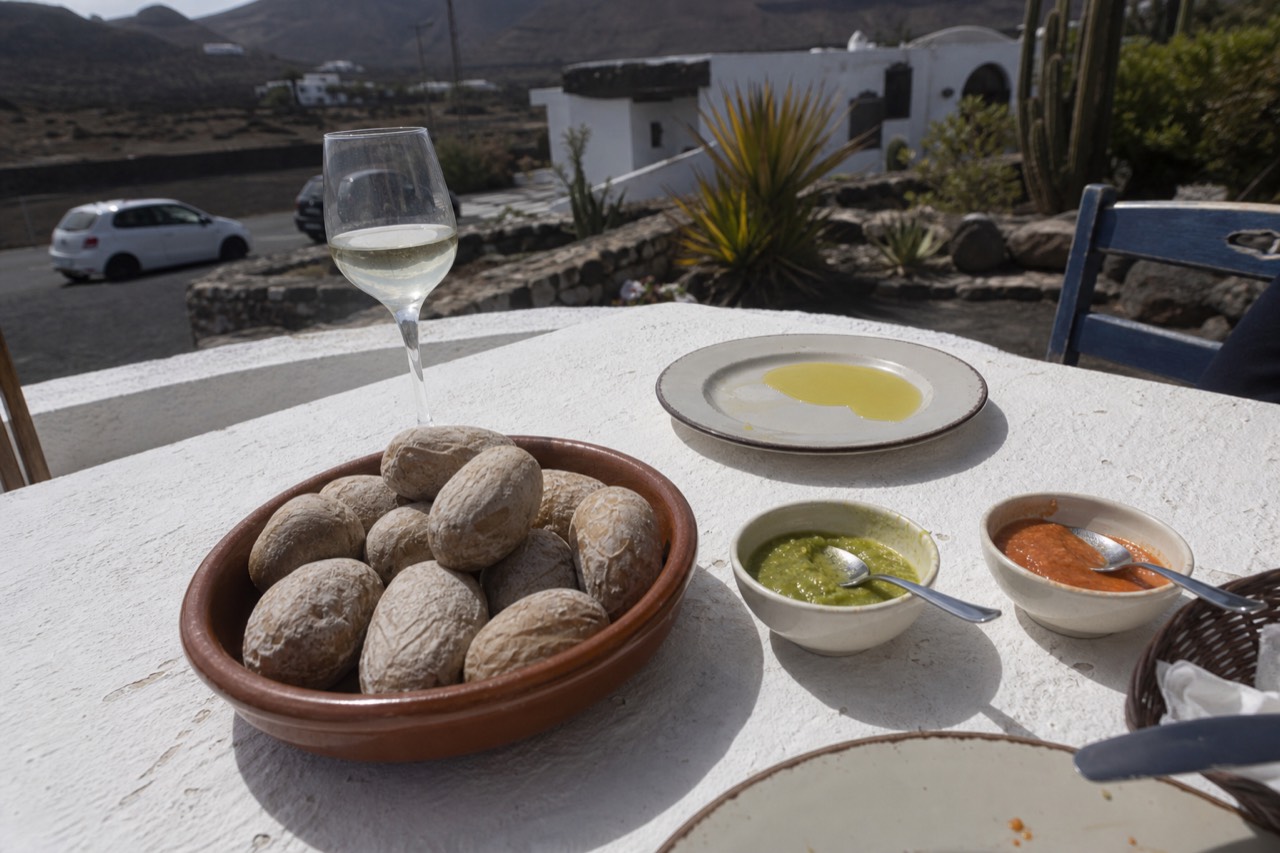
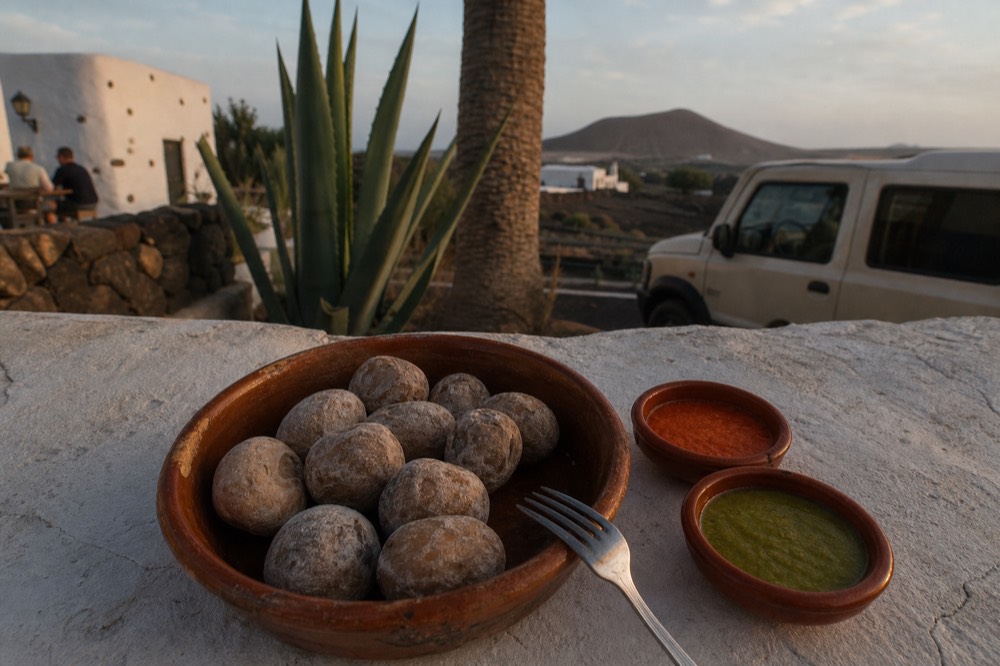
Papas arrugadas, wrinkled potatoes boiled in very salty water until the skin crinkles and the salt crusts, served with mojo rojo and mojo verde, are the dish every Lanzarote kitchen serves. The potatoes are small Canarian varieties, the red mojo is built on pepper and oil, the green on coriander, and together they are the base of almost every meal on the island.
The wrinkle is not a cooking accident, it is the technique. Boil small potatoes in water salted heavily, drain, then return them to the dry hot pot so the skins tighten and a fine salt crust forms. The traditional Canarian potato varieties, dark-skinned and deeply flavoured, are the ones worth asking for by name, though restaurants also use standard potatoes when the old varieties run short.
The two mojos matter as much as the potato. Mojo rojo gets its heat and colour from dried red peppers, often pimentón, garlic, oil and vinegar; mojo verde is coriander or parsley with garlic and oil, milder and sharper. Every family has its own version, and the sauces arrive with everything from potatoes to grilled cheese to fish.
The wine pairing is easy, which is why the dish travels so well with the island's whites. A dry Malvasía Volcánica has the acidity and mineral edge to cut the salt crust and stand up to the garlic, and a rosé from Listán Negro handles mojo rojo's heat if the batch is a fierce one. Where the pairing turns is with the potatoes themselves: the old dark varieties have an earthiness that a very lean white can thin out, so a Malvasía with some lees ageing, the style several bodegas now bottle, is the better match.
Is Lanzarote Cheese The Real Star Of The Table?
Yes, and visitors consistently underrate it. Goat cheese is the island's everyday cheese, served fresh, grilled or cured, and the dairies around Uga and Yaiza now win international awards with it. It is also the cheese served at most Lanzarote wine tastings, because the bodegas buy it from the same dairies the restaurants do.
Lanzarote does not have the named PDO that Fuerteventura's Queso Majorero holds, but the island's goat cheese has its own standing. The strongest evidence is recent: Finca de Uga in Yaiza took gold for its Bodega Cabra y Oveja at the World Cheese Awards 2025, a cheese also named Best Canary Cheese in the same competition, alongside two silvers and a bronze for other cheeses from the same dairy, according to local press reports. That is a single-award-fact, but it points at something real: this is a dairy island, and the cheese is not an afterthought.
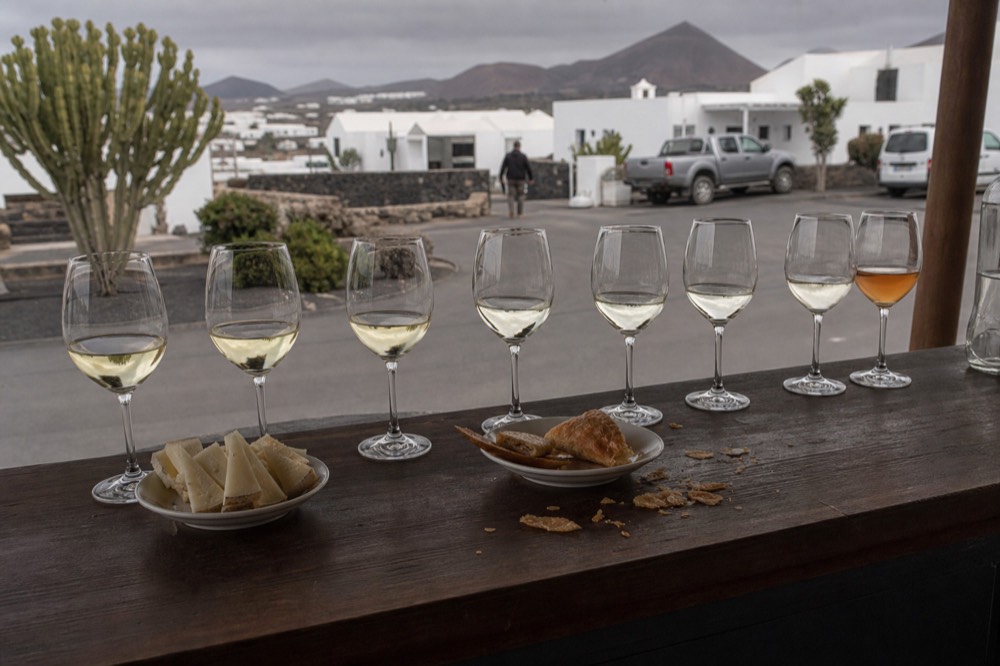
The connection to wine country is direct. Stratvs finishes its guided tastings with artisanal cheeses from Finca de Uga. Rubicón serves island artisan cheeses with both of its guided tours. Los Bermejos pairs its terrace tastings with a small plate of artisanal Lanzarote goat cheese and toasted bread. If you have tasted wine in La Geria, you have already tasted the island's cheese course, possibly without realising it was award-winning.
Three ways of eating it, in ascending order of commitment: fresh, almost spreadable, with mojo verde for breakfast; grilled, a thick slab fried so the outside catches and the middle softens, with mojo and a red wine; and cured, hard and sharp, which is the one that wants a semi-sweet Malvasía rather than a dry one. The grilled plate is the classic restaurant order, and it is the single dish where a Listán Negro red or a rosé beats the island's whites.
The tastings that lean hardest into this cheese-and-wine pairing are the ones worth booking for the food alone.
What Is Sancocho, And Why Does An Island This Dry Eat Salt Fish?
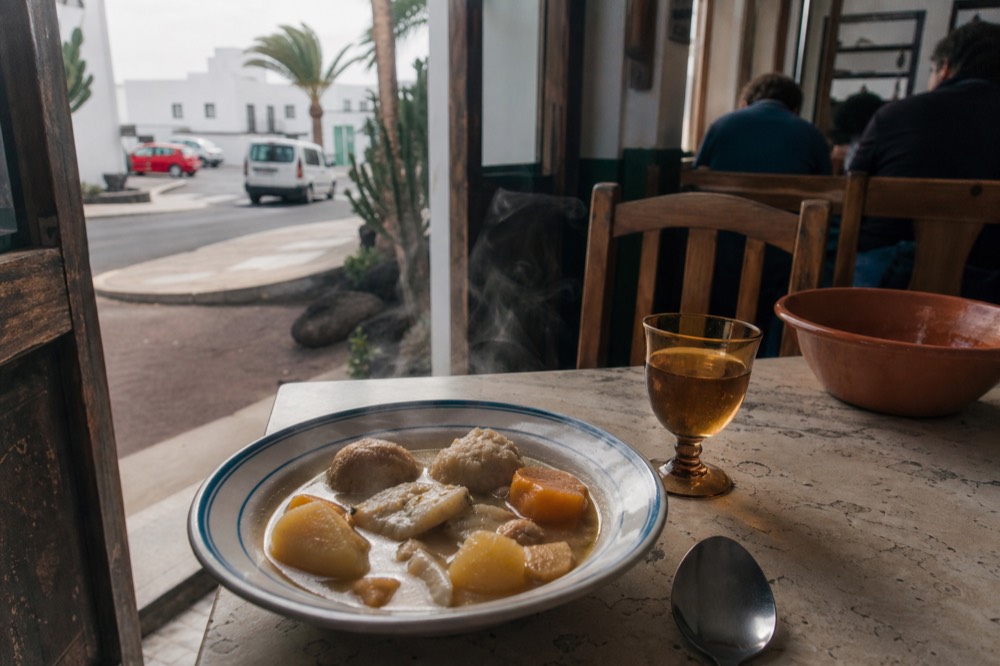
Sancocho is the Canarian salt-fish stew: dried salted fish, usually corvina or cherne, soaked, then boiled with potatoes, sweet potatoes and gofio dumplings, and served with mojo. It exists because Lanzarote's aridity made fresh fish hard to keep, so the island's protein came salted, and the dish that grew around it became the canonical Canarian Friday meal.
The history is practical. A fishing community with no refrigeration and little fresh water salted its catch, and the rehydration and slow boiling became the recipe. The sweet potato in the pot is the volcanic-soil crop; the gofio dumplings, pelotas de gofio, thicken the broth and carry the grain tradition into the dish.
Sancocho is the one plate on this list where wine choice needs care. Salt fish with mojo is a hard match for a light dry white: the salt flattens it and the pepper walks over it. A Malvasía Volcánica with body and some skin contact works, but the island's own answer is the semi-sweet style. The best-documented sweet wine on the island right now is Timanfaya Malvasía Dulce Natural 2018, which took a Grand Gold at Bacchus 2026, the top award at the Spanish Union of Tasters' competition in Madrid, and the sweetness against the salt fish is exactly the pairing the style was made for. If you only order one glass of sweet Malvasía on the island, order it with sancocho.
Finding sancocho takes a little effort. It is a traditional household and restaurant dish rather than a tourist one, and it appears on menus in Arrecife and the inland villages more reliably than in the resorts. The where locals actually eat in Lanzarote page covers the honest version of that question, including why any site that hands you a list of "local favourites" without a source is guessing.
If the food side of the island is what drew you here, the full-day tour is the one that takes the question seriously: four bodegas, brunch, and tapas in a bar that has been pouring since 1890, with the driving handled for you.
What Is Gofio, And Why Is It In Everything?
Gofio is toasted grain flour, the staple food of the Canaries before and after the Spanish arrived, made from roasted wheat, maize or barley ground fine. It is eaten stirred into milk, kneaded with water and oil into dough, thickened into stews, folded into desserts, and it is the one food on this list that is older than every vine on the island.
The Canarian aboriginal people, the Mahos on Lanzarote, were making gofio from toasted barley and fern root long before 1730, and the technique survived because it works in an arid place: toasted grain stores, needs no oven, and turns into a meal with any liquid. Every Canarian family keeps a jar of it.
You will meet gofio in three forms as a visitor. Escaldón, gofio whisked into a hot broth or into the juices of a meat dish until it thickens, served alongside stews. Pelotas, the dumplings in sancocho. And gofio desserts, where it is mixed with honey, almonds or miel de palma into dense, dark sweets. There is also gofio ice cream, which has spread from the islands' restaurants and is the gentlest introduction.
The wine pairing splits by form. Escaldón and savoury gofio want the same dry whites as the rest of the island's cooking. The honeyed desserts are a different matter, and this is where the semi-sweet Malvasía is not just acceptable but correct: a Dulce Natural against a gofio-and-honey sweet is the island's own version of a Sauternes-and-dessert match. The wines Lanzarote is famous for page covers the sweet styles in detail, including which bodegas bottle them consistently.
Which Wine Goes With Which Lanzarote Food?
A dry Malvasía Volcánica pairs with papas arrugadas, fresh cheese, mojo verde and grilled fish; a rosé or Listán Negro handles mojo rojo and grilled cheese; a semi-sweet Malvasía Dulce is the correct pour for sancocho and gofio desserts. The island's own production, roughly 84 per cent white, means the white choices are the ones made in quantity.
The table below is the practical version of that answer. Treat it as a planning guide rather than a rulebook: pour sizes and by-the-glass availability vary by bar and bodega, and the sweet styles are not on every list.
| Dish | Best island wine style | Why it works | Where the style is common |
|---|---|---|---|
| Papas arrugadas with mojo verde | Dry Malvasía Volcánica | Acidity cuts the salt crust, mineral edge matches the ash-grown potato | Every bodega tasting room |
| Papas arrugadas with hot mojo rojo | Rosado, Listán Negro based | Fruit weight absorbs the pepper heat | Most bodegas make one |
| Fresh goat cheese | Dry Malvasía Volcánica | The standard tasting pairing, served at Stratvs, Rubicón and Los Bermejos | Bodega tastings island-wide |
| Grilled goat cheese | Listán Negro red or rosado | Char and fat want more body than a lean white | Restaurant wine lists |
| Sancocho | Malvasía Dulce Natural | Sweetness against salt fish is the classic island match | Bodega shops, some restaurants |
| Gofio desserts, honey and almond | Malvasía Dulce or Moscatel | Matches sweetness instead of fighting it | Bodega shops |
| Grilled fresh fish | Dry Malvasía Volcánica or a sparkling Brut | Saline white for saline fish; the island's traditional-method sparkling is growing | Bodega shops, Arrecife lists |
One honest note on the sparkling option: traditional-method sparkling from Malvasía Volcánica is real and medal-winning, but it is a small part of the DO's output, a fraction of a percent of what the appellation sells, dwarfed by the white wine that dominates the island's commercialisation figures. If you see a bottle of Princesa Fayna on a list, which took Gold at Bacchus 2026 and Bronze at the Decanter World Wine Awards 2026, order it with the fish course and do not expect to see it again tomorrow.
Where Should You Actually Eat The Island's Food?
The most reliable places to eat real Lanzarote food are the bodega restaurants and bars in and around La Geria, the inland villages, and Arrecife, in that order of reliability for a visitor. The island's food festival, Saborea Lanzarote, returns to Teguise on 28 and 29 November 2026, and the Consejo Regulador's Semana Malvasía runs the first week of the same month.
The bodega kitchens are the strongest recommendation because they are verifiable and they pair the food with the wine at source. Stratvs runs a restaurant daily from 12:30 to 19:00 with views over the vineyards. El Grifo's Restaurant Mozaga serves a 90-minute lunch as part of its top-tier gastronomy experience, six wines and Canarian food, at 95 euros per person, adults only. Bodega La Geria has a bar-cafeteria with panoramic views of the Timanfaya volcanoes. These are not hidden gems, they are the working kitchens of working wineries, which is exactly why the food is local and the wine is the local wine.
The tapas-bar tradition is the other authentic route. The island's oldest bars, the kind that date to the 19th century, serve the small plates version of everything above: cheese, mojo, salt fish, gofio. A tour that includes a stop at an 1890 bar with tapas does in one afternoon what would otherwise take three separate restaurant bookings.
For the festival dates, one caution: the 2026 Saborea Lanzarote edition, 28 and 29 November in the Villa de Teguise, is announced by the Cabildo with the word "previsiblemente", expected, so treat it as planned rather than guaranteed until tickets open. Semana Malvasía, the Consejo Regulador's wine week, is scheduled for 2 to 8 November 2026 and is the better week for wine specifically, with public tastings and events around the island.
The evening version of the food-and-wine day out is worth considering if your appetite runs bigger than a tasting.
Can You Build A Whole Day Around Lanzarote Food And Wine?
Yes, and it is the single best use of a day on the island. A full food-and-wine day runs brunch at a bodega, two or three tastings with cheese pairings along the LZ-30, and a late tapas or dinner stop, all inside a driving radius of about half an hour from every major resort. The constraint is drink-driving: Spain's breath limit is 0.25 mg/l, lower than the UK's 0.35.
That last number is the honest reason the organised food day exists. A route of three or four tastings is a lovely afternoon and an unwise drive, and the limit for the driver of a passenger minibus is lower still, 0.15 mg/l, which is why the operators take it seriously. The distances are trivial, Puerto del Carmen to the heart of La Geria is about 14 kilometres, but the wine is not.
The full-day option is the four-winery format: transport included, brunch at the first stop, tastings with cheese at the bodegas, and tapas at a bar that has been pouring since 1890. Six hours, from $176 per person, rated 4.9 across 51 reviews. The shorter cheese-pairing tastings, from $41 for 90 minutes, cover the same pairing logic in miniature if a whole day is too much. The driving the La Geria wine route guide covers the self-drive version, for the days you are tasting lightly or not drinking at all.
Whatever you book, check the cancellation terms before you pay: every tour on this island's roster currently offers free cancellation, so it is table stakes rather than a selling point, but confirm it on the live listing anyway. And if the day you want is in July or early August, book early: the harvest starts then, the first week of July in 2026, and wine country is at its busiest while it is at its most interesting.
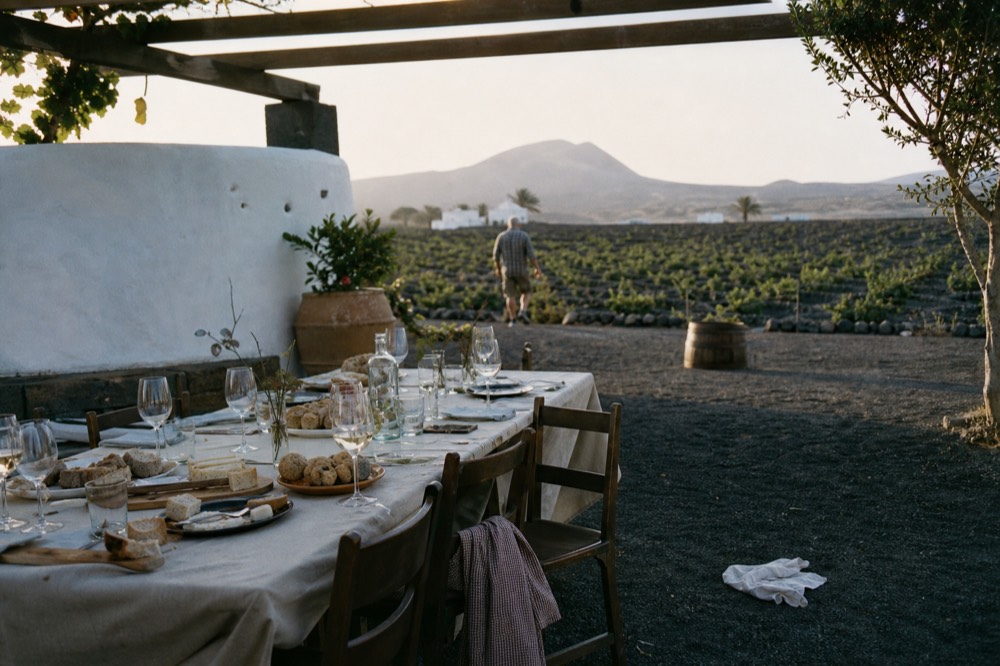
For a site that spends most of its time on wine, this page's conclusion is a food one: the island's cooking and its wine are the same story, ash and scarcity and ingenuity, and the visitors who eat them together get the whole story. Lanzarote Wine Tours exists for exactly that pairing, and these three tours are the ones that serve it whole.
The foods Lanzarote is famous for are papas arrugadas with mojo, goat cheese, sancocho, gofio and grilled fish, and the questions visitors ask about them are practical: what is typical Canarian food, whether the island suits food lovers, what can be brought home, which wine handles spice, and when the food events run. The answers below cover each of those in turn, with the wine pairing built in where it matters.
Common Questions About Food In Lanzarote
What Food Is Lanzarote Famous For?
Papas arrugadas with mojo rojo and mojo verde, fresh and grilled goat cheese, sancocho, gofio in its savoury and sweet forms, and grilled Atlantic fish, all served alongside the island's dry and semi-sweet Malvasía Volcánica wines.
What Is Typical Canarian Food?
The same core list: papas arrugadas with mojo, goat cheese, sancocho, gofio, and grilled fish, plus ropa vieja and potajes across the archipelago. Lanzarote's version leans hardest on volcanic-soil crops like sweet potatoes and on goat dairy, because its aridity limits everything else.
Is Lanzarote Good For Food Lovers?
Yes, with the right expectations. It is not a fine-dining destination at heart, though it holds a Michelin star at Kamezí in Playa Blanca per press reports, and its Bib Gourmand and recommended entries are growing. Its strength is traditional cooking served at source, in bodega kitchens and old tapas bars.
What Food Is Famous In Lanzarote That I Can Bring Home?
Gofio, sealed and light; cured goat cheese, subject to your home country's dairy import rules; mojo sauces in jars; and wine, with the caveat that roughly 98 per cent of DO Lanzarote never leaves Spain, so the winery shop is your best chance at bottles like a Malvasía Dulce Natural.
Which Lanzarote Wine Goes With Spicy Food?
A rosado made from Listán Negro for heat like a strong mojo rojo, or an off-dry Malvasía. Very dry, very lean whites get flattened by capsaicin, so save the leanest bottles for the salt and garlic dishes instead.
When Is The Best Time Of Year For Food Events On Lanzarote?
Early November, when Semana Malvasía runs from 2 to 8 November 2026 and Saborea Lanzarote is planned for 28 and 29 November in Teguise. August brings the traditional harvest events in La Geria, and the harvest itself starts in July, the first week of July in 2026.